
The tense of a in English tells you when something happened compared to “now.” Did it happen before “now” (in the past), during “now” (in the present), or after “now” (in the future)?
Casually, we often say that verb forms like the present simple, past continuous, or future perfect are “tenses.” But technically, these are different aspects of just three tenses: past, present, and future.
In this post, we’ll talk about those three tenses and explain how and why labels like “continuous,” “simple,” and “perfect” can be used to describe different types of past, present, and future tense verbs. We’ll also direct you to other resources that you can use to learn about verb tense in English. Let’s look!
What is the past tense in English?
We use the past tense for anything that happened before “now” (the “moment of speech”).

In English, there are three main types of past tense verbs: past simple, past continuous, and past perfect.
Past simple verbs are used to talk about something that is over or finished:
Mark flew from Chicago to New York on Monday.
He walked around midtown and looked at shop windows.
Past continuous verbs are used to talk about something that was happening before or during the time when something else happened.
While I was walking on Fifth Avenue, I saw a man on the street with a big sign.
The man was talking as people walked by him.
Past perfect verbs are used to talk about something that was finished before something else that happened in the past.
I had walked ten minutes when I finally found the subway entrance.
We didn’t know that John had been to Florida before he went with us.
Sometimes we also use other types of past tense verbs like the past perfect continuous (I had been cleaning), but these are less common. Remember, the past tense includes everything before the present moment, the “now.”
What is the present tense in English?
We use the present tense
for anything that happens or is true during the “moment of speech.” The length of time it continues to happen before now or after now is not important. It can be true right now, today, this week, this month, or even forever.
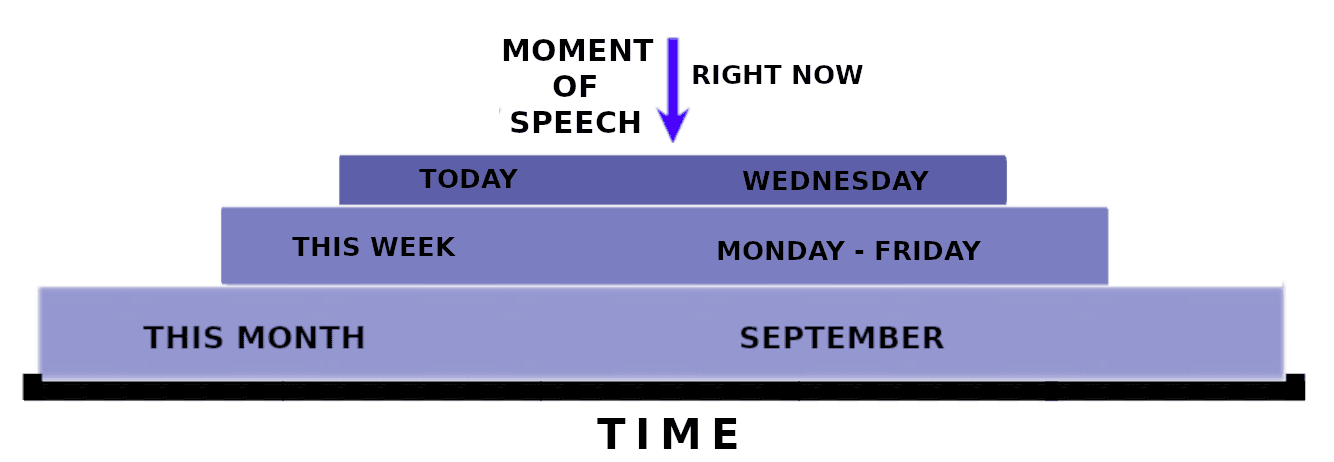
In English, there are three main types of present tense verbs: present simple, present continuous, and present perfect verbs.
Present simple verbs are used to talk about habits, customs, and truths:
Mark enjoys traveling.
We always go to the library on Friday.
Present continuous verbs show that an action is happening right now:
Mark is making plans for his trip today.
I am running to catch the bus right now.
Present perfect verbs show that something that happened in the past is still important and true in the present.
Mark has talked about this trip for months!
You have read this book before, right?
Sometimes we use the present tense to talk about our present plans for the future (ex: I am starting school next week). There are also other types of present tense verbs, like the present perfect continuous (I have been walking to school since I was five).

What is the future tense in English?
We use the future tense to talk about anything that happens after the present moment.
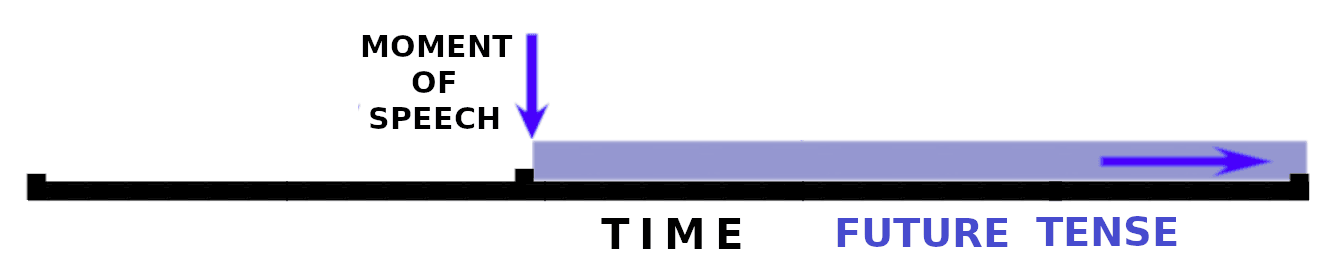
Here are the types of future tenses:
Future tense verbs with will (sometimes called “future simple”) can be used for any action that happens after “now.” Usually, we use will if we are making a decision at the moment of speech.
Mark will bring the papers to the office.
Mark will see the Empire State Building.
The future continuous shows that something will happen for an extended period of time in the future.
Mark will be staying in a hotel in Greenwich Village.
I will be washing dishes for the next hour.
The future perfect shows that something will be finished before something else happens in the future.
Mark will have read all about New York City before he arrives.
But even though these three types exist, English speakers often talk about the future in other ways:
We talk about the future using the present tense:
Mark is flying to New York next Monday
We discuss future events using English modal verbs :
You can go to the library on Friday
We very often talk about the future using the phrase be going to:
I am going to go to the zoo tomorrow.
We also have other ways to talk about the future, like the future perfect continuous (ex: I will have been studying for six hours by dinner time) but these are less common.
Summing up
Here’s what you’ve seen in this post:
The tense of a verb tells you when something happened compared to “now.”
The basic tenses in English are:
past tense (before now)
present tense (during now)
future tense (after now)
There are different types of verbs in each tense. We call these types of verbs “aspects” (ex: simple, perfect, continuous). A verb’s “aspect” gives you more information about how something happened, how long it happened for, or when it happened compared to when something else happened.
Want to practice your verb tenses? Take a look at our English verb tense activities! Or, if you want a reference sheet of all the types of verbs in each tense, have a look at our English tense and aspect table.