
The past perfect in Brazilian Portuguese is a verb tense that is used to talk about something that happened further in the past than another past action or moment. There are two forms of the past perfect: a simple form and a compound form (using an auxiliary verb and past participle). For example:
Simple Past Perfect:
Eu já saíra quando ele chegou.Translation: I’d already left when he arrived.Compound Past Perfect:
Eu já tinha saído quando ele chegou.Translation: I had already left when he arrived.
The past perfect is often referred to as “the past of the past,” and it is commonly used to describe a sequence of past actions, to report speech in the past, to discuss past facts related to the present, and to express wishes in Brazilian Portuguese. Keep on reading this post and let’s get to know more about it!
How to form the past perfect in Brazilian Portuguese?
In Brazilian Portuguese, the past perfect has two forms: a compound form and a simple form. While the simple form is created using just one verb (e.g. saíra), the compound form is created by combining two verbs (e.g. tinha saído).
Now, let’s review how to form both of these conjugations in detail.
How to form the compound form of the past perfect?
The compound form of the past perfect is constituted by the auxiliary verb ter meaning to have in the imperfect, followed by a main verb in the past participle.
Here is how to conjugate the auxiliary ter in the imperfect:
| Subject Pronouns | ter meaning to have in the imperfect |
|---|---|
eu meaning I | tinha |
tu meaning you | tinhas |
você meaning you, sg.ele meaning he, itela meaning she, it | tinha |
nós meaning we | tínhamos |
vós* meaning you, formal | tínheis |
vocês meaning you, pl.eles, elas meaning they | tinham |
In Brazilian Portuguese, the past participle of regular verbs ends in --ado (for -ar verbs) or -ido (for -er, -ir verbs). See the examples below:
- estudar → estudadoTranslation: to study → studied
- comer → comidoTranslation: to eat → eaten
- dormir → dormidoTranslation: to sleep → asleep
However, some past participles are . Check this chart to quickly review how to form verbs in the past participle.
How to form the simple past perfect in Brazilian Portuguese?
The simple form of the past perfect in Brazilian Portuguese is formed by a single verb with a unique set of conjugation endings, as in:
The simple form of the past perfect is formed according to the steps below:
Start with the form of the verb of the preterite tense:
eles/elas estudaramRemove the ending -am to isolate the verb stem
estudaram → estudar-Add the corresponding ending for the past perfect. For that, see the chart below:
Simple past perfect tense Subject Pronouns Ending estudar comer dormir eu meaning I-aestudaracomeradormiratu meaning you-asestudarascomerasdormirasvocê meaning you, sg.ele meaning he, itela meaning she, it-aestudaracomeradormiranós meaning we-amosestudáramoscomêramosdormíramosvós* meaning you, formal-eisestudáreiscomêreisdormíreisvocês meaning you, pl.eles, elas meaning they-amestudaramcomeramdormiramFor the subjects nós meaning we and vós meaning you, formal, you need to include an accent ( ´ ) on the last syllable of the stem for -ar and -ir verbs and a ( ^ ) for -er verbs.

When to use the past perfect in Brazilian Portuguese?
The main use of the past perfect is to talk about the “past of the past”: an action that concluded before another past action started. For example:
In the example above, we have two past actions: before eu cheguei meaning I arrived took place, another action almoçar meaning to have lunch had already happened. This is the action that takes the past perfect.
past perfect
preterite
present
moment of speech
As the examples so far show, it’s common to use the past perfect with another action verb in the preterite. However, we can also use the past perfect with a past action in the imperfect tense too, as in:
Let’s look at some specialized ways to talk about the past of the past.
Past perfect + ‘antes de’ + infinitive
It’s common to use the past perfect tense followed by the expression antes de meaning before + another verb in the infinitive.
It can also be acceptable to use the Brazilian Portuguese personal infinitive after antes de. This is a more advanced grammar topic, but if you feel up to the challenge, check out our other post!
Past perfect + expression of time
Sometimes we use an expression of time, rather than a verb, to represent the more recent past moment that came after the action in the past perfect. For example:
Past perfect of ‘acabar de’ + infinitive
You can use the past perfect of the expression acabar de to indicate something that had just taken place before another past action.
You can think of this as the “recent past of the past.”
The past perfect in reported speech
The past perfect is also used in reported speech in Brazilian Portuguese, particularly when reporting what was said about the past in the past. We use this structure when converting direct speech said in the past into indirect speech.
| Direct speech | Indirect reported speech |
|---|---|
“Os funcionários fizeram uma greve.” Translation: “The employees went on strike.” | Ele disse que os funcionários tinham feito uma greve. Translation: He said that the employees had gone on strike. |
“Carla limpou a casa.” Translation: “Carla cleaned the house.” | Eles disse que Carla tinha limpado a casa. Translation: They said that Carla had cleaned the house. |
The past perfect for past facts related to the present
In Brazilian Portuguese, we often use the past perfect to imply that a situation has just now changed. For example:
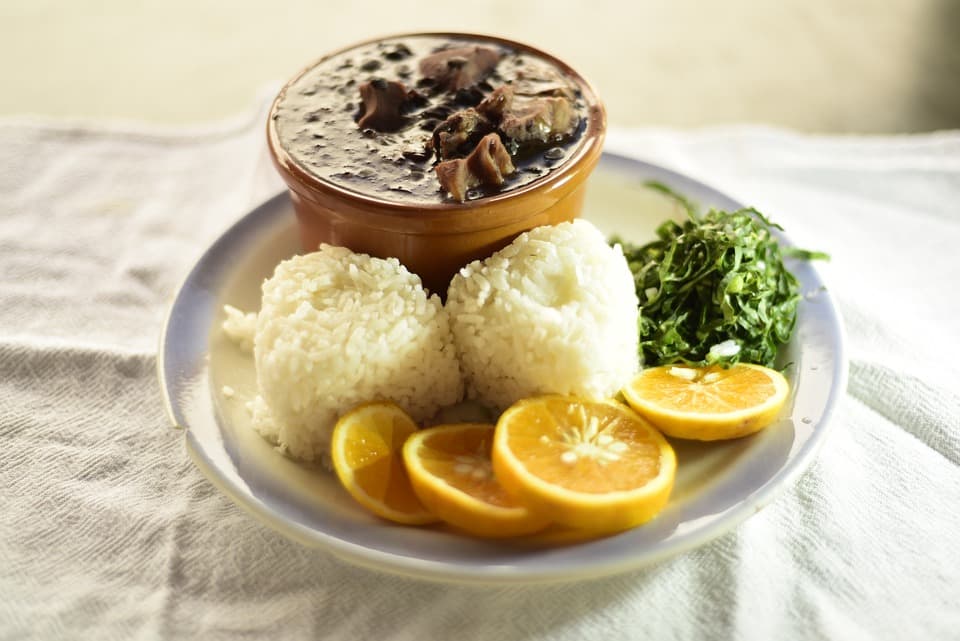
Feijoada is a Brazilian black bean stew.
The implication is that at every moment before now, I had not tried feijoada before that moment. The word nunca meaning never must be used in this case to show the idea of never having done something before (until the present moment).
This same structure can also be used to say that an experience has already happened before (in addition to the present moment):
The past perfect for expressions of wishes
The simple form of the past perfect is also used in several expressions that we use to wish about something in Brazilian Portuguese. For example:
Quem me dera meaning I wish literally translates to “who had given me,” and it is a common expression used to express that something would be great if it were true. The verb dar meaning to give is used in the simple past perfect form: dera. Some other expressions that use the past perfect like this include:
Pudera! meaning It's obvious!
Quisera… meaning I wish
Tomara... meaning I hope
For examples of how to use these expressions, check out this chart of wish expressions with the past perfect!
In summary
As we’ve seen in this post, the past perfect has two forms: the simple form and the compound form. Brazilians rarely use the simple form in everyday language, but it can be used to express wishes or in literary or formal language.
We use the past perfect…
to talk about a past action that happened before another past action
with adverbs like já meaning already, ainda não meaning not yet, still, nunca meaning never, antes de meaning before, and with other expressions of time
in reported speech
to talk about a past action related to the present
in expressions of wishes and surprise
Now, practice what you know about the past perfect in Brazilian Portuguese with this activity!