The present perfect subjunctive and the past perfect subjunctive are two of the three past of the Spanish subjunctive mood. In this post we will show you how to form and use the present perfect and past perfect subjunctive to talk about “what has happened” or “what would have happened.”
For example:
- Present perfect subjunctive:Espero que ya hayas comido.Translation: I hope you have already eaten.
- Past perfect subjunctive:Esperaba que ya hubieras comido.Translation: I was hoping you would have already eaten.
Both of these tenses are compound tenses, that means that they are formed with two verbs: haber and a past participle.
Recall that the subjunctive has three past tenses. To learn about the imperfect subjunctive don’t miss out on our post “How to use the imperfect subjunctive in Spanish?”
The Spanish present perfect subjunctive
First, we’ll review the present perfect subjunctive, which is used to discuss “what has happened.”
How to form the present perfect subjunctive?
The present perfect subjunctive is formed with the haber in the present subjunctive and the of the main verb.
Let’s see some examples while reviewing the conjugations of verb haber in the present subjunctive:
| Person | Present subjunctive of the verb haber | past participle |
|---|---|---|
yo | haya | estudiadovendidoleído |
tú | hayas | |
él/ella/usted | haya | |
nosotros | hayamos | |
vosotros | hayáis | |
ellos/ellas/ustedes | hayan |
For example:
Do you remember how to form the past participle? If you need to refresh your memory really quickly, check out a cheat-sheet we created on how to form the Spanish past participle.
How to use the present perfect subjunctive?
We use the present perfect subjunctive to indicate an action that happened prior to the present or the future and in any of the situations the Spanish subjunctive would be used: to express doubt, negation, uncertainty, with triggering conjunctions, etc.
The same triggers that apply to the Spanish present subjunctive also apply to the present perfect subjunctive, with a slightly different relation to the present and future expressed in the main clause. Let's see what those are!
Actions prior to the present
The present perfect subjunctive expresses a current sentiment or thought about an event or action in the past.
Espero que el bebé haya dormido bien.Translation: I hope the baby slept well.I’m currently hoping that baby slept well, though I’m unsure whether he did or not.Dudamos que hayas estudiado toda la noche.Translation: We doubt that you studied all night.This tense is useful to express recent events in the past:
Acaba la tarea, a menos que ya la hayas hecho.Translation: Finish your homework, unless you have already done it.Actions prior to the future
We can also use the present perfect subjunctive as the “past of the future.” That means that when we use a verb in the future in the main clause, the verb in the will have potentially happened before the action in the future.
Tendré vacaciones en cuanto haya acabado los exámenes finales.Translation: I will go on vacation as soon as I am done with the final exams.We can also refer to the past of the future, but with a verb in the imperative. For example,
Avísame cuando hayas llegado a casa.Translation: Let me know when you have arrived home.
The Spanish past perfect subjunctive
Next, we’ll discuss the past perfect subjunctive, which is used to talk about “what would have happened.”
How to form the past perfect subjunctive?
Finally! We made it to the last of the subjunctive tenses: the past perfect subjunctive (also known as the pluperfect subjunctive). It is formed almost like the present perfect subjunctive, but this time we need to use the auxiliary haber in the imperfect subjunctive.
Let’s review the conjugations:
| Person | Present subjunctive of the verb haber | past participle |
|---|---|---|
yo | hubiera | estudiadovendidoleído |
tú | hubieras | |
él/ella/usted | hubiera | |
nosotros | hubierámos | |
vosotros | hubiérais | |
ellos/ellas/ustedes | hubieran |
The verb haber in the imperfect subjunctive (just like the other verbs in the imperfect subjunctive) has two forms: the -ra form and the -se form! 👉 Don’t forget to check out the conjugation tables for more!
How to use the past perfect subjunctive?
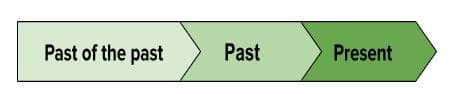
And when do we use this form? Well, similarly to when we use the Spanish past perfect indicative to talk about “the past of the past.” That is, when we are talking about the past and we reference an action that was done before that point in the past.
For example:
The past perfect subjunctive is used in this same context, but when we express doubt, negation, or in any other context in which the subjunctive is triggered.
As observed in the first example, we are talking about an event in the past that was completed (Juan was asleep) before the second past event (I arrived home). But, in the second example, we express surprise that Juan was asleep by using me sorprendió, which triggers the subjunctive in the past.
With the perfect conditional
The Spanish perfect conditional can also be paired with the past perfect subjunctive to express a possibility that could have occurred before a past event.
Need a refresher on the Spanish perfect conditional? Head over to our post!
With the past perfect subjunctive
We can also express wishes using ojalá meaning I wish and the past perfect subjunctive when we want to express something we wished had happened in the past.
Ojalá nos hubiéramos dado cuenta antes. meaning I wish we would have realized earlier.Ojalá me lo hubieras dicho en la mañana. meaning I wish you would have told me in the morning.‘Si’ clauses
Another common use of the past perfect subjunctive is in a si meaning if clause together with the conditional to express hypothetical situations in the past. In this case we use the past perfect subjunctive when we express impossible conditions.
Si clause
si past perfect subjunctive
Main clause
conditional
In this type of expression, the past perfect subjunctive can be paired up with both the present conditional to refer to a condition with consequences in the present:
Or with the perfect conditional, to refer to a condition with consequences in the past:
To sum up
In this post we discussed how to form the present perfect and past perfect subjunctive and the main uses of each of these tenses.
We saw that these tenses are used when we have a trigger for the subjunctive in the main clause for example: an expression of doubt, negation, uncertainty, or a triggering conjunction, but we refer to a past action.
The present perfect subjunctive is used for actions prior to the present or future.
The past perfect subjunctive is used for actions prior to the past.
We also saw that the past perfect subjunctive is used in si meaning if clauses to express hypotheses about the past.
And finally we saw how these tenses are used with ojalá to make wishes that may or may not be possible.
To sum up how to use the past tenses of the subjunctive in Spanish, here’s a summary of the tenses that typically pair up with each other.
| Tenses in the main clause | Tenses in the subordinate clause |
|---|---|
Present indicative | ➔ Present perfect subjunctive ➔ Imperfect subjunctive |
Past tenses indicative | ➔ Imperfect subjunctive ➔ Past perfect subjunctive |
Future indicative or Imperative | ➔ Present perfect subjunctive |
Present conditional Past conditional | ➔ Imperfect subjunctive ➔ Past perfect subjunctive |
Are you ready to practice? Try out the activities we created for you! ¡Esperamos que lo disfrutes! meaning We hope you enjoy it!