The of place in French include words such as à meaning at, to, dans meaning in, sur meaning on, en meaning in, de meaning from, of, chez meaning at, devant meaning in front of, derrière meaning behind, and à côté de meaning next to. In French, like in English, prepositions of place are used to say where something or someone is in relation to other things.
Sometimes, French prepositions of place will share similar meanings but depend on context. For example, do you want to know why we say, J’habite aux Etats-Unis meaning I live in the United States but J’habite en France meaning I live in France?
In this post, we’ll review the prepositions of place in French, beginning with the common preposition à meaning at, to. Then, we’ll look at prepositions used to express where you’re living, going, and coming from, as well as the preposition chez meaning at and French prepositions used to describe where something or someone is. Let’s dive in!
How to use the prepositions ‘à’ and ‘de’ in French?
Use the French preposition à with places to describe where someone or something is heading “to” or where it is “at,” and use the preposition of place de to discuss where someone or something is “from.”
You can use à in combination with the verb aller meaning to go to say “going to” or with être meaning to be to say "to be at...," but you will use de instead with the verbs venir meaning to come and arriver meaning to arrive. The French prepositions à and de are some of the most used and versatile prepositions!
À and de are prepositions that form a with French definite articles. Because à and de contract with some definite articles, the prepositions can have four different forms, depending on the gender (masculine or feminine) of the French noun or the number (singular or plural) of the French noun that follows. The possible forms of à and de with a definite article can be seen below:
| Definite article | Preposition of place + article (à / de+ article) | Example |
|---|---|---|
la- feminine, singular noun la pharmacie meaning drugstore, | à la | Je vais à la piscine. Translation: I’m going to the swimming pool. |
de la | Il vient de la bibliothèque. Translation: I’m coming from the library. | |
le- masculine, singular noun le supermarché meaning supermarket, | au Transcription: (= à + le) | Je suis au musée. Translation: I’m at the museum. |
du Transcription: (= de + le) | Nous venons du supermarché. Translation: We are coming from the supermarket. | |
les- plural noun les toilettes meaning restroom, | aux Transcription: (= à + les) | Il va aux courses de chevaux. Translation: He’s going to the horse races. |
des Transcription: (= de + les) | Tu viens des magasins après avoir chercher un cadeau. Translation: You are coming from the shops after looking for a gift. | |
l’université meaning university, | à l’+ mute h or a, e, i , o, u, y | Nous sommes à l’hôtel. Translation: We are at the hotel. |
de l’+ mute h or a, e, i , o, u, y | Vous venez de l’université. Translation: You are coming from the university. |
Now that you’ve seen how to form these contractions with à and de, let's take a look at how to use both, along with dans and en, to discuss where someone lives or is located, where they’re going, and where they are coming from.
How to use French prepositions of place with geographical places?
Use French prepositions of place with geographical names of countries, regions, and cities to say where you live, where you’re going, and where you come from. For geographical locations such as these, you will choose from the prepositions à, de, dans, and en, combined with verbs indicating your direction (whether you are living in, going to, or coming from this place). Choosing the right preposition of place for a given geographical place (such as the city of Paris or the country of Cambodia, etc.) depends on a variety of factors.
Take a look at the steps below to help you select the right preposition of place to use with a geographical location:
Step 1: What type of geographical place are you describing? A town, a city, a region, a state, a continent, an island?
You will use à and de/d’ with towns, cities, and islands of any gender.
For regions, countries, states, and continents, you will need to look at the gender and number to choose between à, de/d’, dans, and en.
Step 2: What is the gender, number, and starting letter of the geographical location in your sentence?
The gender and number of each type of geographical place will also impact which preposition you use. Sometimes you will use à and de (often as contractions with a definite article), and other times you will use dans or en. Once you have identified the type of place you are describing, you’ll need to recognize the gender and number of that place to pick your preposition.
Pay attention, too, to the starting letter of the geographical name. Locations beginning with a vowel may require the preposition d' instead of de.
Step 3: Determine what type of direction of movement you are describing. Are you “in” or “going to” the location? Or are you “coming from” this place?
Use à(and its contractions), dans, and en to say you are "at" a place or going "to" a place.
Use de (and its contractions) when you are coming "from" somewhere.
For a summary of how to use prepositions of place with geographical locations, check out the table below:
| Type of location (incl. gender) | Movement is “going to” or “being at” | Movement is “coming from” | ||
|---|---|---|---|---|
| Preposition | Examples | Preposition | Examples | |
town, city, and island (masculine or feminine) | à | J’habite à Marseille. Translation: I live in Marseilles. | venir + de / d’ Transcription: (+vowel) | Vous venez d’Albertville ? Translation: Do you come from Albertville? |
masculine singular country | au | Ils voyagent au Maroc. Translation: They travel to Morocco. | venir + du | Tu viens du Canada. Translation: You come from Canada. |
masculine singular region, state | dans le | On habite dans le Wisconsin. Translation: We live in Wisconsin. | venir + du | Nous venons du Jura. Translation: We come from Jura. |
feminine region, state, country, and continent*, | en | J’habite en Allemagne. Translation: I live in Germany. | venir + de | Nous revenons d’Europe. Translation: We are coming back from Europe. |
Il voyage en Iran. Translation: He is traveling to Iran. | venir + d’ Transcription: (+vowel) | Tu arrives d’Italie ? Translation: Are you traveling from Italy? | ||
plural country, island | aux | Je déménage aux Etats-Unis. Translation: I am moving to the USA. | venir + des | Elle vient des Seychelles. Translation: She comes from Seychelles. |
plural region, state | dans les | Je vais en vacances dans les Pyrénées. Translation: I am going on vacation to the Pyrenees. | venir + des Transcription: (+vowel) | Vous venez des Pyrénées ? Translation: Do you come from the Pyrenees? |
Check out our learning resource for more examples of how to use the French prepositions à, en, dans, and de with geographical locations. You'll also find a list of all of the US states with their proper French prepositions of place!
How do you use the French preposition ‘chez’?
Use the preposition chez to say that you are going to or are currently at someone’s home. An English speaking friend of mine once read the words " chez Martin" on an invitation. He assumed the host's first name was "Chez." In reality, the host’s name was Martin and the invite was giving the location: “at Martin’s home.” So, learn your prepositions so you won’t call someone the wrong name!
Let’s take a look at some examples:
Bienvenue chez moi ! meaning Welcome to my house! Use chez meaning at when you are at or when you're going to somebody's place or house.
✅ Je vais à la maison.Translation: I’m going home.✅ Je vais chez moi.Translation: I’m going home.❌ Je vais chez ma maison.You can also use chez with other locations, such as le coiffeur meaning the hairdresser.
✅ Je suis chez le coiffeur.Translation: I’m at the hairdresser.✅ Je suis au salon de coiffure.Translation: I’m at the hair salon.❌ Je suis au coiffeur.However, in Francophone countries, you will sometimes still hear people say, Je suis/vais au coiffeur. But don’t tell them it’s grammatically wrong, because they could get offended!
Before we wrap up, we’ll review some additional prepositions of place that you can use to locate people, animals, and things in space.

What are some additional French prepositions of place?
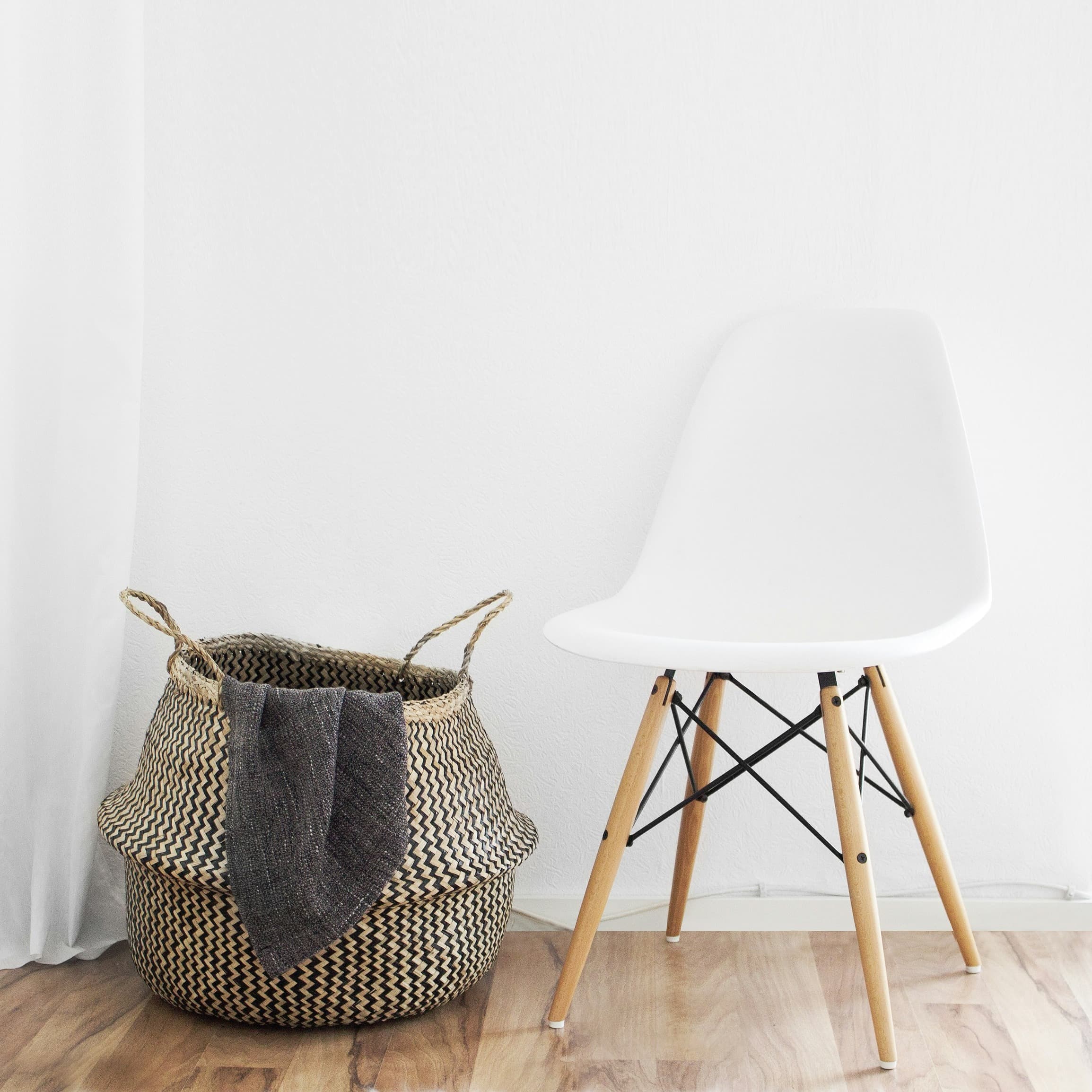
In addition to the prepositions we have seen above, there are more French prepositions of place that can be used to describe the position or location of someone or something. To help describe where something is in a space, you can use prepositions like dans meaning in, sur meaning on, sous meaning under, devant meaning in front of, derrière meaning behind, and à côté de meaning next to, among others.
Imagine you are trying to tell someone where an object or person is located. You will use the following French prepositions of place similarly to how you might use the English prepositions. Take a look:
dans meaning in

sur meaning on

sous meaning under

devant meaning in front of

derrière meaning behind

à côté de meaning next to
For more prepositions of place in French, check out our full list of prepositions and prepositional phrases!
Before we wrap up, let’s take a look at a couple of adverbs of place versus their corresponding prepositions of place, as this difference can be confusing for French learners.
Dedans meaning inside, in, indoors is an adverb, so it cannot be used with a complement. The preposition dans meaning in, inside must be used with a noun complement to explain what someone or something is in:
dedans + 🚫Translation: inside, in, indoors≠dans + complementTranslation: in, inside✅ Je suis dans la maison.Translation: I’m in the house.✅ Je suis dedans.Translation: I’m inside. I’m in. I’m indoors.❌ Je suis dedans la maison.Like above, the adverb dehors meaning outside cannot be used as a complement, but the preposition hors de meaning outside of must be accompanied by a noun.
dehors + 🚫Translation: outside≠hors de + complementTranslation: outside of✅ Le magasin est situé hors de la ville.Translation: The shop is situated outside of the city.✅ Matilda joue dehors.Translation: Matilda plays outside.❌ Matilda joue dehors la ville.
Here are a few final reminders when using prepositions of place:
dans meaning in ≠ à meaning at
À is more common when you want to say where you are. Using dans is more precise and indicates that you are inside a building.
Je suis à la gare.Translation: I’m at the train station.Je suis dans la gare.Translation: I’m inside the train station.Prepositional phrases with de:
For all prepositional phrases with de, like en face de meaning opposite, près de meaning near, à gauche de meaning on the left of, de always still contracts with the article (le or les) of the noun that follows.
de + le → duLa piscine est près du supermarché.Translation: The swimming pool is near the supermarket.de + les → desLe magasin de sport est à gauche des massifs de fleurs.Translation: The sports shop is on the left of the flowerbeds.Now you should be a French prepositions of place expert! Let’s recap what you’ve learned.
Let’s recap
Just like in English, make use of French prepositions of place to give someone’s or something’s location. Keep the following in mind:
À and de sometimes form contractions with the definite article of the noun they precede.
With geographical locations, you’ll need to consider the type of location, the gender, number, and starting letter of the location, and which direction you’re going in when choosing the correct preposition.
Use chez for someone’s home or business.
Other useful prepositions of place like dans, sur, sous, devant, derrière, à côté de, hors de, en face de, près de, and à gauche de can be used to situate someone or something in space.
Now that you’ve got this covered, why don’t you practice your knowledge with our exercises on French prepositions of place!
Or, if you are particularly interested in French prepositions of time, we have you covered in a separate article!