
The English words this, that, these, and those are used to indicate or point out a noun (person, place, thing, or idea). They also give general information of the position of that noun.
We call this, that, these, and those “demonstrative adjectives” or “demonstrative pronouns,” depending on how they are used in a sentence:
Demonstrative come before a :
- I saw that movie.
- I know these facts.
Demonstrative replace a noun:
- I saw that.
- I know these.
In this post, we’re going to look at what this, that, these, and those mean and how to use them as adjectives and pronouns. Then we’ll look at another kind of demonstrative word in English, called demonstrative adverbs (here, there, now, then). Let’s get down to brass tacks!
What is the difference between ‘this,’ ‘that,’ ‘these,’ and ‘those’?
The basic difference between this, that, these, and those is illustrated in the table below:
| Nearby | Far away | |
|---|---|---|
| Singular | this | that |
| Plural | these | those |
Let’s look at some examples!
This book is thin. 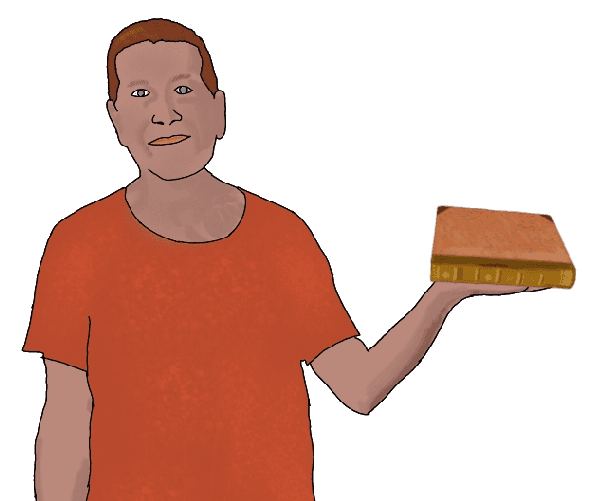 | That boy is short. 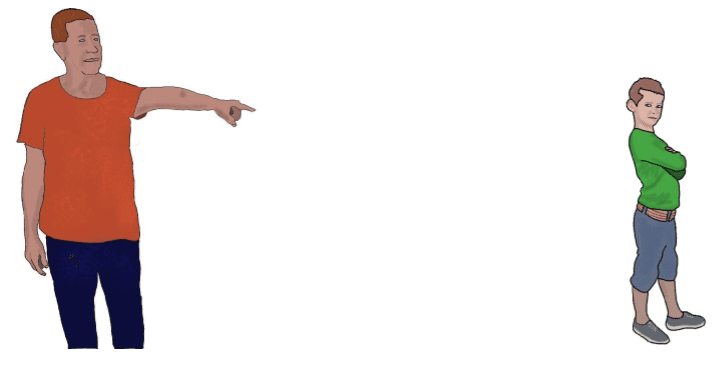 |
These books are thick.  | Those boys are tall. 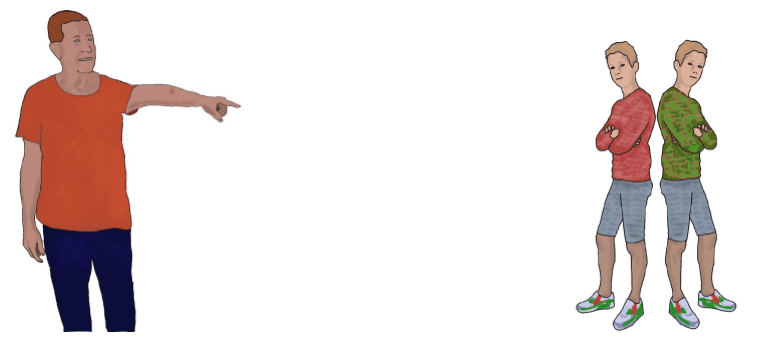 |
How to use demonstrative adjectives in English?
When this, that, these, and those come before a noun, they are called “demonstrative adjectives.”

This house is very big.

These houses are very beautiful.
Demonstrative adjectives are determiners in English. This means that:
When you are using other adjectives to describe something, the demonstrative adjective must come first:
- ✅ This cute, happy dog is named Alex.❌ Cute, this, happy dog is named Alex.
You can’t use them with another determiner like (the, a/an), (my, your, their…), (John’s), and some (some, any, many...).
- ❌ The that dog is named Alex.two determiners: the and that
How to use demonstrative pronouns in English?
When we use this, that, these, or those alone, without a following noun, we call them “demonstrative pronouns.”
- I saw that movie yesterday. → I saw that yesterday.
- I’ve seen this movie before. → I’ve seen this before.
- I got those toys for Sarah. → I got those for Sarah.
- I got these toys for Sarah. → I got these for Sarah.
Here are some special rules for demonstrative pronouns:
Use this / these + be to present or introduce someone inside a conversation or to name something near the speaker:
- This is my friend Melody.
- These are my friends, the Lees.
- This is my new invention, the Whoosiwhatsit!the Whoosiwhatsit is in your hand
Use that / those + be to name someone who is not in the conversation or to name something that is further away from the speaker:
- That is my friend Melody over there.
- Those were my friends, the Lees.
- That is my new invention, the Whoosiwhatsit!the Whoosiwhatsit is in your hand
If you are using a verb that is not a , do not use a demonstrative pronoun to replace a person. It is very rude. Instead use a personal pronoun (he/him, she/her, or they/them) or just use a demonstrative adjective + noun.
- I saw that girl yesterday. →❌ I saw that yesterday.✅ I saw her yesterday.
- I saw these people yesterday. →❌ I saw these yesterday.✅ I saw them yesterday.
- That man came to visit yesterday. →❌ That came to visit yesterday!✅ He came to visit yesterday!
It is also better to use a personal pronoun to replace any noun that can think or that we think of as more like a person than an object:
How to use ‘this / that one’ or ‘these / those ones’ in English?
We often use the phrases this / that one or these / those ones to contrast two similar nouns in English. For example:
- I’m watching this movie today, but I saw that one yesterday.
- I’ve seen that movie before, but I’ve never seen this one.
- I got these toys for Sarah and I got those ones for Paul.
- I got those toys for Sarah. These ones are for Paul.
Unlike the demonstrative pronouns, we can use this/that one or these/those ones to refer to people or things. Here are some cases where you might need or want to use them for people:
When you are contrasting two people:
- Mrs. Marcus’s kids are not as well behaved as these ones.
- I’ve never met a girl as nice as this one.
When you are treating people as objects to move around:
- Which kids will ride with you?
- I’ll take these ones in my car, and you can take those ones.
To show that you find a child, pet, or inferior person exasperating or troublesome:
- Mrs. Marcus’s youngest son is a tornado! That one is going to get in trouble when he starts school!
However, a personal pronoun or demonstrative adjective + noun is usually a more polite way to refer to a person.
What are the English demonstrative adverbs?
The English demonstrative adverbs are here, there, now, and then. Like demonstrative adjectives and demonstrative pronouns, demonstrative adverbs “point out” a particular thing. However, demonstrative adjectives are used to point out:
the place where something is
the place where something happens
he direction something is moving
the time when something happened
Let’s look first at here and there, then we’ll look at now and then.
How to use ‘here’ and ‘there’ in English?
We use here and there to “point out” where something is (its location) or which way it is going (its direction of motion).
here → nearby or towards us
there → far away or away from us
| here meaning nearby, close, toward us | there meaning far away, distant, away from us | |
|---|---|---|
| 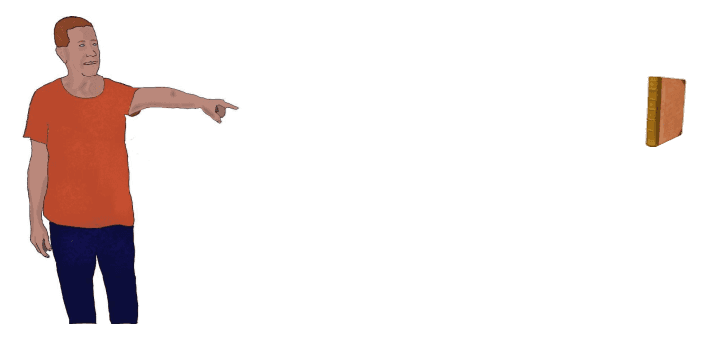 | |
Place (where it is or where it happens) | The book is (over) here. The book sat here. | The book is (over) there. The book sat there. |
Direction (where it is going) | He came here. He brought the book here. | He went there. He put the book there. |
A few points about using here and there:
Use here/there + be when you point to or present a noun or an noun’s location.
- Here is your dinner!
- There is my favorite teacher.
Here and there alone can mean either at nearby/far away or to nearby/far away.
- She’s here.She is at nearby.
- She’s there.She is at far away.
- Come here!Come to nearby!
- Go there!Go to far away!
However, you can use them after prepositions of place or prepositions of motion to give a more specific description of a nearby or distant place. For example:
- Hide under here/there!New York? I come from there!We keep our toys in here/there.I ran up here/there.The ball rolled down here/there.
We often use the words over and right before here and there in speech.
Use over to give a general location or direction.
- Let’s sit over there by the pool.
- I wish she would come over here.
Use right if you are giving an exact location or clarifying.
- No, it’s not over there, it’s right here! Look!
- You can’t see him? He’s right there!
How to use ‘now’ and ‘then’ in English?
We use now and then to “point out” when something happened or when a situation existed.
now → during the time when we are speaking
then → in the past or future
For example:
- John is taller now than he was a year ago. He has grown since then.
- Do you want to come over now? I’ll have food at 2:00, maybe you should come then, instead…
Some things to notice:
The word now means at the present time, and then means at a particular past/future time.
- I like him now.I like him at the present time.
- I liked him then.I liked him at at particular time.
However, you can use now and then after prepositions of time like until, by, since, before, or after.
- She didn’t like him until now.I thought I would be rich by now.I’ve been a lot happier since then.I should have done my homework before now.
Though now usually refers to the moment of speech, in some narratives now can refer to the “now” for the character. For example:
- Mr. Jones was so hungry. If he didn’t get something to eat right now, he thought he might collapse!
But you can also just use then:
- Mr. Jones was so hungry. If he didn’t get something to eat right then, he thought he might collapse!
Use right + now/then to give an exact moment in time. Use back + then to talk about a time in the distant past.
- She decided right then to get a Master’s degree.
- She didn’t eat vegetables much back then, but now she’s cooking zucchini!
Summing up
And those are all the demonstrative words of English! In this post we saw:
How to use this, that, these, and those, as adjectives (before a noun) or as pronouns (instead of a noun):
Number Close Far Singular
thisthatPlural
thesethoseWe also saw how to use demonstrative adverbs here, there, now, and then:
Use for… Close Far Location/Direction
herethereTime
nowthen
Ready to get some practice? Have a look at our English this, that, these, and those activities! Best of luck!