
Indefinite pronouns are words used to refer to things or ideas, and people in a general sense. There is no need to specify who or what they are. For example: Alguien llamó esta tarde. meaning Someone called this afternoon. or ¿Me trajiste algo? meaning Did you bring me something?. Some of them have a masculine, feminine, singular, and plural, for example uno, una meaning one, unos, unas meaning some; and some of them are invariable, like algo meaning something and alguien meaning someone. Ready to find out more?
How to use indefinite pronouns in Spanish?
Indefinite pronouns can replace nouns that have been previously mentioned or can be recovered from context. For example:
Sí, llegaron algunos. meaning Did students come to class?
Yes, some came.
As you can see algunos refers to the previously mentioned estudiantes. These pronouns are particularly useful when answering questions.
Furthermore, there is a small group of indefinite pronouns that don't necessarily have to refer to someone or something previously mentioned. For example:
In this case, the person to whom we are referring is unknown, so we use an indefinite pronoun.
This group includes: alguien meaning someone, nadie meaning no one, quienquiera meaning whoever, algo meaning something, and nada meaning nothing.
Indefinite pronouns can refer to people, things, and quantities. We’ll begin with the pronouns that can refer to both people and things and then we’ll discuss the ones that can only be used with things/objects, and finally the ones that are exclusive for people.
Pronouns that refer to both people and things
Most Spanish indefinite pronouns can refer to both people and things. Let’s see which ones they are.
The singular forms uno and una are used to refer to a noun and mean "(any) one."
Una de mis hijas quiere ser cantante.Translation: One of my daughters wants to be a singer.Uno/una can also be used by the speaker as an indirect reference to themselves, or others:
Ya estoy viejo. Uno ya no está para desvelarse.Translation: I’m old now. One doesn’t (I don’t) stay up late anymore.Sé que las cosas pueden ser difíciles, Arturo, pero uno tiene que ser entusiasta en esta vida.Translation: I know that things are difficult, Arturo, but one needs (you need) to be enthusiastic in life.Uno can also be used in an impersonal way to make a generalization:
En esta vida, uno no sabe qué esperar.Translation: In this life, one never knows what to expect.Finally, uno/una can be used in the construction uno mismo/una misma to refer to "oneself"
Es importante conocerse a uno mismo.Translation: It’s important to know oneself.The plural forms, unos and unas, translate as “some” and they refer to an indefinite number of people or objects.
Unos quieren amor, otros fortuna meaning Some want love, others want fortune.Unos replaces a plural masculine noun and unas replaces a plural feminine noun that is specific within a wider group. In this case, it can also translate as "any."
¿Qué tipo de zapatos quieres?Translation: What type of shoes do you want?Unos con agujetas.Translation: Any with shoelaces.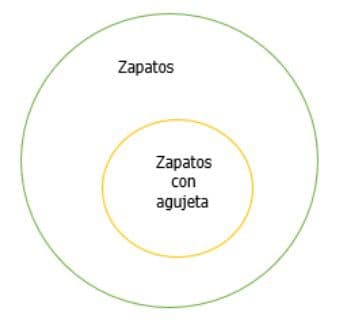 ¿Qué galletas buscas?Translation: What cookies are you looking for?Unas cubiertas de chocolate.Translation: Any with a chocolate cover.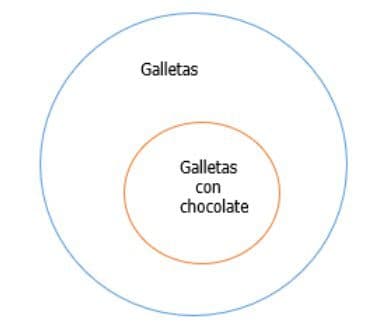
‘Alguno,’ ‘alguna,’ ‘algunos,’ ‘algunas’
These pronouns refer to unknown, not specific objects or people and translate to “one” or “any.” These pronouns need an antecedent in order to know what they refer to.
‘Ninguno,’ ‘ninguna’
These pronouns are the negative counterparts of uno(s) and alguno(s) and their corresponding feminine forms, and translate as "none." When they are placed after the verb, they require a double negative.
-No queda ninguna. meaning How many lollipops are left?
-None are left.
‘Cada uno,’ ‘cada una’
Cada uno/cada una means “each one” and refers to each member of a specific group of people or objects when highlighting the same characteristic or function of each.
‘Cualquiera’
Cualquiera meaning any or anyone refers to both objects or people that are not specific and there is no need to specify them. It’s invariable — that means it can be used to replace feminine, masculine, singular, and plural nouns.
¿Qué libro prefieres? Cualquiera de ficción. meaning What book do you prefer? Any of fiction.Cualquiera puede hacer una vuelta de carro. meaning Anyone can do a cartwheel.‘Otro,’ ‘otra,’ ‘otros,’ ‘otras’
Otro meaning another, and its variants, when used as a pronoun means “another one” or “others.” They refer to a noun with the same characteristics as the one it replaces.
Pronouns that refer only to things
The indefinite pronouns algo meaning something and nada meaning nothing refer only to things.
‘Algo’
Just as in English, algo meaning something refers to an unknown specific object or concept.
In this example algo is replacing a specific concept, for example un sentimiento meaning a feeling.
'Nada'
Nada meaning nothing or anything is the opposite of algo, and it describes the nonexistence of objects or concepts. When placed after the verb, it requires a double negative.
Pronouns that refer only to people
The indefinite pronouns alguien, quienquiera, and nadie can only refer to people.
'Alguien'
This pronoun refers to an unknown person and it’s invariable. It’s translated as “someone” or “somebody.”
In questions, it can be used as “anybody.”
¿Conoces a alguien que hable japonés? meaning Do you know anyone that speaks Japanese?‘Quienquiera’
Quienquiera meaning who(m)ever is always used as a pronoun. It’s invariable and refers to an unknown, unspecified person.
‘Nadie’
Nadie meaning no one, nobody, anybody describes the nonexistence of people. Just like with nada, when used after the verb, it requires a double negative.
Finally, there are other pronouns that are used to refer to quantities, for example: Quedan pocos. meaning There are a few left., but to learn about those, we’re going to need another post: "What are quantifiers in Spanish?" So stay tuned!
In sum
Indefinite pronouns substitute nouns that refer to people or objects in general. Let’s briefly go over the three categories that we covered in this post:
Most of them can refer to both people and things: uno, una meaning any, unos, unas meaning some, algunos, algunas meaning some, cada uno meaning each one, cualquiera meaning any, anyone, otro, otra meaning other, otros, otras meaning others.
The negative counterpart is ninguno or ninguna meaning none.
Algo meaning something can only refer to things or concepts.
The negative counterpart is nada meaning nothing.
Finally, alguien meaning someone and quienquiera meaning whoever can only refer to people.
And its negative counterpart is nadie meaning no one.
Ready to take your new knowledge to the next level? Here’s an activity to get you going!