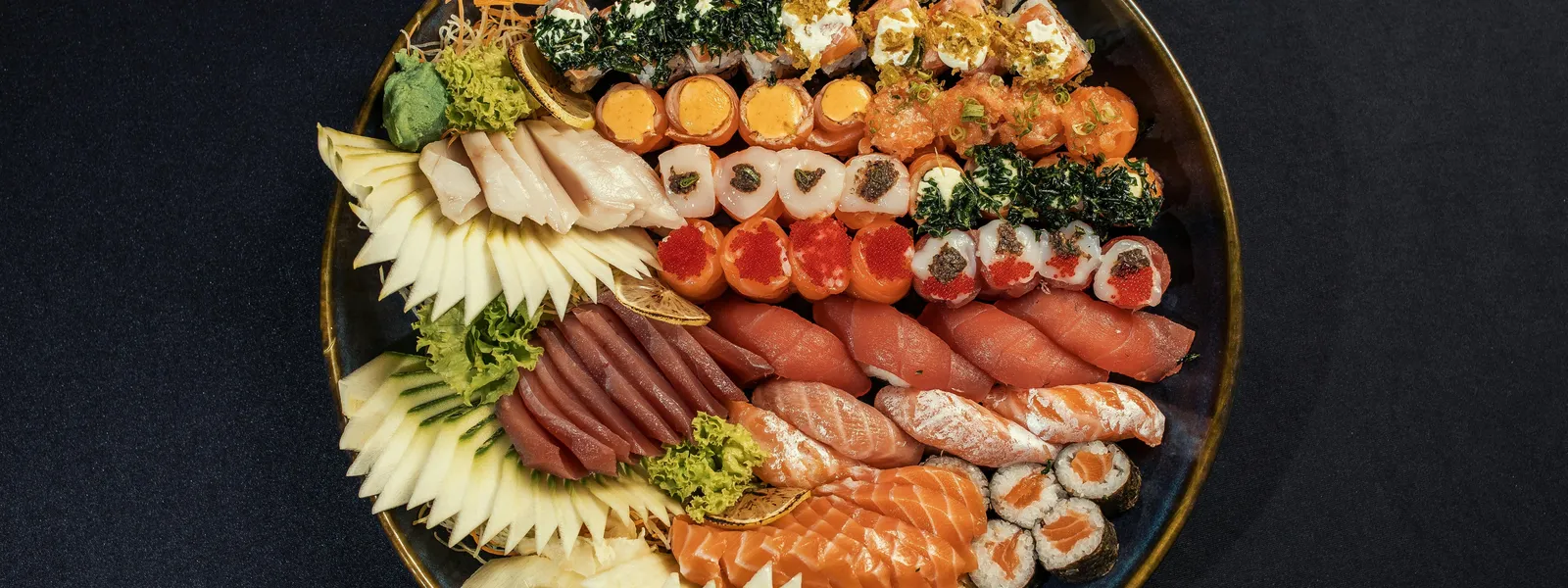
Japanese adjectives, like English adjectives, are words that we use to describe . In a Japanese sentence, the adjective can either come before the noun it modifies or at the end of the sentence.
An adjective before a noun forms a
おいしい 寿司Transcription: oishii sushiTranslation: delicious sushiAn adjective at the end of a sentence is used like you might use “to be” + adjective in English:
この寿司はおいしいTranscription: kono sushi wa oishiiTranslation: This sushi is delicious.
However, it’s not always quite so simple! Japanese adjectives sometimes take endings, and those endings follow two different grammatical patterns, depending on what kind of adjective you use. The two types of Japanese adjectives are i-adjectives and na-adjectives.
In this post, we’ll introduce you to the difference between i-adjectives and na-adjectives, chat about how to “conjugate” adjectives (and what it means to do so!), and give you some tips that will help you get started using adjectives in Japanese. Ready to take a look? Let’s dive in!
Adjective types: i-adjectives vs. na-adjectives
Japanese adjectives fall into two groups: i-adjectives and na-adjectives. The group an adjective belongs to will determine exactly how you should use it in a sentence, both before a noun and in “be” + adjective sentences.
In this section, we’ll introduce you to the differences between these two groups and discuss where they get their names.
What are i-adjectives in Japanese?
In Japanese, i-adjectives (or i-type adjectives) are adjectives whose dictionary form can be placed directly in front of the noun they describe:
i-adjective
dictionary form
noun
All i-adjectives have a dictionary form that ends with い transcribed i. This is the source of their name. For example:
- いいTranscription: iiTranslation: good, nice
- 赤いTranscription: akaiTranslation: red
- おいしいTranscription: oishiiTranslation: tasty, delicious
- おとなしいTranscription: otonashiiTranslation: gentle, docile
What are na-adjectives in Japanese?
Japanese na-adjectives are adjectives that can only come before a noun if they are followed by な transcribed na, as in the structure below:
na-adjective
dictionary form
noun
Unlike i-adjectives, na-adjectives don’t have well-defined dictionary form. They can follow a wide range of patterns, for example:
| Type | Example |
|---|---|
“kango” | 元気 Transcription: genki Translation: energetic, cheerful, healthy |
“wago” | にぎやか Transcription: nigiyaka Translation: lively |
きれい Transcription: kirei Translation: beautiful, clean | |
foreign-origin words written in katakana | ユニーク Transcription: yuniiku Translation: unique, unusual |
Want some tips for how you can tell whether an adjective that ends in い transcribed i is an i-adjective or a na-adjective? Jump to the end of the article where we discuss this question in more detail.
When are Japanese adjectives inflected?
In Japanese, we inflect or adjectives when they are used to form an adjective sentence. These are sentences that you would translate into English using “be” + adjective.
When an adjective is conjugated, it changes its form to reflect the tense (past vs. non-past), politeness (plain vs. polite), and polarity (positive vs. negative) of the sentence. But the conjugation pattern will be a bit different depending on whether you’re using an i-adjectives or a na-adjective. Let’s have a look!
How to conjugate i-adjectives?
To conjugate an i-adjective in the plain form, remove the ending い transcribed i, and replace it with the endings outlined below, depending on the and whether the verb is positive or negative. To form the polite form, simply add です transcribed desu to the plain form.
| Form | Plain form | Polite form |
|---|---|---|
Non-past affirmative: | 暑い Transcription: atsui | 暑いです Transcription: atsui desu |
Past affirmative | 暑かった Transcription: atsukatta | 暑かったです Transcription: atsukatta desu |
Non-past negative | 暑くない Transcription: atsukunai | 暑くないです Transcription: atsukunai desu |
Past negative | 暑くなかった Transcription: atsukunakatta | 暑くなかったです Transcription: atsukunakatta desu |
Here’s an example sentence:
How to conjugate na-adjectives?
To conjugate a na-adjective, you’ll add the endings directly to the dictionary form. The endings here are a bit more complicated, as you won’t use the same ending for polite forms throughout the conjugation.
| Form | Plain form | Polite form |
|---|---|---|
Non-past affirmative: | きれいだ Transcription: kirei da | きれいです Transcription: kirei desu |
Past affirmative | きれいだった Transcription: kirei datta | きれいでした Transcription: kirei deshita |
Non-past negative | きれいじゃない Transcription: kirei ja nai | きれいじゃありません Transcription: kirei ja arimasen |
Past negative | きれいじゃなかった Transcription: kirei ja nakatta | きれいじゃありませんでした Transcription: kirei ja arimasendeshita |
Here are some examples:
- Speaker A:大学の寮はきれいですか。Transcription: Daigaku no ryō wa kirei desu ka.Translation: Is your dormitory at university clean?
- Speaker B:いいえ、あまりきれいじゃありません。Transcription: Iie, amari kirei ja arimasen.Translation: No, it’s not very clean.
- Speaker A:日本語のテスト、どうだった?Transcription: Nihongo no tesuto, dō datta?Translation: How was the Japanese test?
- Speaker B:わりと簡単だったよ。Transcription: Warito kantan datta yo.Translation: It was relatively easy.
Adjectival nouns: Na-adjective sentences vs. noun sentences
You may notice that na-adjective sentences look a lot like “noun sentences”— sentences that consist of “noun + da/desu,” as in:
Because of this similarity, na-adjectives have often been called adjectival nouns (nouns that are used as adjectives).
However, there is one big difference between nouns and adjectival nouns: how you use them to answer yes-no questions. When answering a yes-no question about a noun, you usually don’t need to repeat the noun, but when you answer a yes-no question about a na-adjective, you should repeat that adjective. Let’s compare:
| Noun Sentences | Adjective Sentences | |
|---|---|---|
| Question | ジョンさんは学生ですか。 Transcription: Jon san wa gakusei desu ka. Translation: Is John a student? | その寿司はおいしいですか。 Transcription: Sono sushi wa oishii desu ka. Translation: Is that sushi tasty? |
| “Yes” Answer | ええ、そうです。 Transcription: Ē, sō desu. Translation: Yes, he is. | ❌ええ、そうです。 Transcription: Ē, sō desu. Translation: Is that sushi tasty? ✅ええ、おいしいです。 Transcription: Ē, oishii desu. Translation: Yes, it is tasty. |
| “No” Answer 1 | いいえ、そうじゃありません。 Transcription: Iie, sō ja arimasen. Translation: Yes, he is. | ❌いいえ、そうじゃありません。 Transcription: Iie, sō ja arimasen. ❌いいえ、違います。 Transcription: Iie, chigaimasu. ✅いいえ、おいしくないです。 Transcription: Iie, oishikunai desu. Translation: No, it is not tasty. |
| “No” Answer 2 | いいえ、違います。 Transcription: Iie, chigaimasu. Translation: No, he is not. |
What are 連体詞 [rentaishi] in Japanese?
In Japanese, 連体詞 transcribed rentaishi are a group of adjectives that cannot be used to form adjective sentences and can only be used before the noun they modify. In English, you might hear them called “adnominal adjectives” or “pre-noun adjectives.”
- 大きな猫Transcription: ōkina nekoTranslation: large cat
- おかしな顔Transcription: okashina kaoTranslation: funny face
- ある所Transcription: aru tokoroTranslation: certain place
- 小さな犬Transcription: chiisana inuTranslation: small dog
- ほんの一口Transcription: hon no hitokuchiTranslation: just a bite
- その人Transcription: sono hitoTranslation: that personThe words この transcribed konomeaning this..., その transcribed sonomeaning that... and あの transcribed anomeaning that... over there are all considered belonging to this group.
Adnominal adjectives can only be used before the noun, and cannot be conjugated at the end of a sentence.
- ✅縄文杉はとても 大きな 木です。Transcription: Jōmonsugi wa totemo ōkina ki desu.Translation: The jōmon cedar is a very large tree.
- ❌縄文杉はとても 大きなです。Transcription: Jōmonsugi wa totemo ōkina desu.Translation: The jōmon cedar is very large.
Luckily, though, many adnominal adjectives have a “partner” adjective with basically the same meaning that is a regular i-adjective and can be used at the end of a sentence. For example:
| Adnominal Adjective | i-adjective | Translation |
|---|---|---|
大きな Transcription: ōkina | 大きい Transcription: ōkii | big, large |
小さな Transcription: chiisana | 小さい Transcription: chiisai | small, little |
おかしな Transcription: okashina | おかしい Transcription: okashii | funny |
So where you cannot use the adnominal member of the pair at the end of a sentence, it’s just fine to use the i-adjective version:
- ❌縄文杉はとても大きなです。Transcription: Jōmonsugi wa totemo ōkina desu.Translation: The jōmon cedar is very large.
- ✅ 縄文杉はとても 大きいです。Transcription: Jōmonsugi wa totemo ōkii desu.Translation: The jōmon cedar is very large.
How to ask about adjectives in Japanese?
To ask “what kind” of noun something is in Japanese, you can use the question word どんな transcribed don’nameaning what kind of before a noun. To answer, a question like this, simply replace どんな transcribed don’na with the form of the adjective you use before a noun.
- Speaker A:狆はどんな犬ですか。Transcription: Chin wa don’na inu desu ka.Translation: What kind of dog is a Japanese spaniel?
- Speaker B:おとなしい犬です。Transcription: Otonashii inu desu.Translation: They are docile dogs.i-adjective!
- Speaker A:渋谷はどんな街ですか。Transcription: Shibuya wa don’na machi desu ka.Translation: What kind of town is Shibuya?
- Speaker B:にぎやかな街です。Transcription: Nigiyakana machi desu.Translation: It’s a lively town.na-adjective!
To ask how something or someone is or was, we can use the question word どう transcribed dō or its polite version いかが transcribed ikaga. Questions like these are typically answered with adjective sentences.
- Speaker A:沖縄旅行はいかがでしたか。Transcription: Okinawa ryokō wa ikaga deshita ka.Translation: How was your trip to Okinawa?
- Speaker B:とても楽しかったです。Transcription: Totemo tanoshikatta desu.Translation: It was so much fun.
Tips for using Japanese adjectives
We’ve covered the basics, so let’s give you some tips that will help you learn and use Japanese adjectives.
Real i-adjectives vs. na-adjectives that end in い [i]
As we saw above, all i-adjectives end with い transcribed i, but some na-adjectives also end in い transcribed i. So how can you tell which ones are actually na-adjectives?
Luckily, there aren’t that many na-adjectives that end with い transcribed i. For beginners, then, the simplest way to remember which adjectives that end in い transcribed i are actually na-adjectives is to memorize them along with な transcribed na.
Here are some useful “i”-ending na-adjectives to remember. At N5 level of the Japanese Language Proficiency Test (JLPT), you can probably get by with just the first four.
| Hiragana | Kanji | Romaji | Meaning |
|---|---|---|---|
きれい[な] | 綺麗[な] | kirei[na] | beautiful, pretty, clean |
きらい[な] | 嫌い[な] | kirai[na] | to dislike, to hate |
ゆうめい[な] | 有名[な] | yūmei[na] | famous |
しんぱい[な] | 心配[な] | shinpai[na] | worried, worrisome |
ていねい[な] | 丁寧[な] | teinei[na] | polite, courteous, careful |
いっしょうけんめい[な] | 一生懸命[な] | isshōkenmei[na] | with heart and soul, hard (work) |
とくい[な] | 得意[な] | tokui[na] | proud, good, strong |
いがい[な] | 意外[な] | igai[na] | surprising, unexpected |
ゆうがい[な] | 有害[な] | yūgai[na] | harmful |
Once you reach a more advanced level, the kanji can also give you a hint. Recall that the い transcribed iending on i-adjectives is actually an ending on the stem, so it’s not part of the adjective itself. This means that when we write i-adjectives in kanji “i” is not part of the reading of the kanji.
On the other hand, the “i” on na-adjectives is part of the stem and so it is included in the pronunciation of the kanji (as you can see above!). The only exception is 嫌い transcribed kirai, a na-adjective that is one of the Japanese-origin words.
A tricky case: いい (ii) and よい (yoi)
The i-adjectives いい transcribed ii and よい transcribed yoi, which both mean “good” or “nice,” differ only in the non-past affirmative forms. In all other forms they are identical. The adjective いい transcribed ii is more casual and more commonly used in everyday Japanese.
| Form | Plain form | Polite form | ||
|---|---|---|---|---|
Non-past affirmative | いい Transcription: ii | よい Transcription: yoi | いいです Transcription: ii desu | よいです Transcription: yoi desu |
Past negative (formal) | よかった Transcription: yokatta | よかったです Transcription: yokatta desu | ||
Non-past negative | よくない Transcription: yokunai | よくないです Transcription: yokunai desu | ||
Past negative | よくなかった Transcription: yokunakatta | よくなかったです Transcription: yokunakatta desu | ||
For example:
- Speaker A:日本語能力試験の1級に合格しました!Transcription: Nihongo nōryoku shiken no ikkyū ni gōkaku shimashita!Translation: I passed the level N1 of the Japanese Language Proficiency Test!
- Speaker B:わあ、よかったですね。おめでとうございます!Transcription: Wā, yokatta desu ne. Omedetō gozaimasu!Translation: Wow, that’s great! Congratulations!Literally: It was good, wasn’t it! Congratulations!
- Speaker A:ねえ、そっちの天気はどう ?Transcription: Nē, socchi no tenki wa dō?Translation: Hey, how's the weather down there?
- Speaker B:昨日はよくなかったけど、今日はいいよ。Transcription: Kinō wa yokunakatta kedo, kyō wa ii yo.Translation: It was not good yesterday, but it’s good today.
To sum up
In this post, we explored the basic facts on Japanese adjectives. Here is a quick summary of the differences between i-adjectives and na-adjectives:
| i-adjectives | ||
|---|---|---|
| Before a noun | dictionary form | |
| Before a noun | Non-past affirmative | い / いです Transcription: i / i desu |
| Past affirmative | かった / かったです Transcription: katta / katta desu | |
| Non-past negative | くない / くないです Transcription: kunai / kunai desu | |
| Past negative | くなかった / くなかったです Transcription: kunakatta / kunakatta desu | |
| na-adjectives | ||
|---|---|---|
| Before a noun | dictionary form + な transcribed na | |
| Adjective sentence | Non-past affirmative | だ / です Transcription: da / desu |
| Past affirmative | だった / でした Transcription: datta / deshita | |
| Non-past negative | じゃない / じゃありません Transcription: ja nai / ja arimasen | |
| Past negative | じゃなかった / じゃありませんでした Transcription: ja nakatta / ja arimasendeshita | |
Ready to practice what you learned? Check out our Japanese adjective activities. Or, if you’d like to review the alternative negative conjugations, check out our Japanese adjective conjugation reference sheet. Happy learning!