In Japanese, the most common way say the clock time is to give the number of hours, marked by 〜時 transcribed ji, followed by the number of minutes, marked by 〜分 transcribed fun/pun:
Number of hours + 時 transcribed ji
Number of minutes + 分 transcribed fun/pun
A time like 3:00 can be written a number of different ways:
All in Arabic numbers → 3:00
All in kanji → 三時 transcribed san ji
Arabic number and kanji → 3時
Hiragana → 3じ / さんじ
The basic formula is pretty simple, but there is a lot more to learn! In this post, we’ll start by going over how to read a clock in detail, then we’ll talk about how to use clock times in Japanese sentences. Let’s dive in!
How to read a clock in Japanese?
As we indicated above, the time in Japanese is most often read using the formula:
Number of hours + 時 transcribed ji
Number of minutes + 分 transcribed fun/pun
However, if you want to use this formula correctly, you’ll need to learn some pronunciation rules. In this section, we’ll go over how to combine numbers of hours, minutes, and seconds with counter words. We’ll talk about some other ways you can read a clock in Japanese that are equivalent to “half past six” or “three minutes to two.” Let’s have a look!
時 [ji]: How to give the number of hours?
When giving the time, the Japanese counter 時 transcribed ji is used after the number of hours. With times on the hour, it is equivalent to “o’clock” in English.
| Clock | Written Japanese | Pronunciation | English | |
|---|---|---|---|---|
1:00 | 1時 | 一時 | いちじ Transcription: ichi ji | 1 o’clock |
3:00 | 3時 | 三時 | さんじ Transcription: san ji | 3 o’clock |
8:00 | 8時 | 八時 | はちじ Transcription: hachi ji | 8 o’clock |
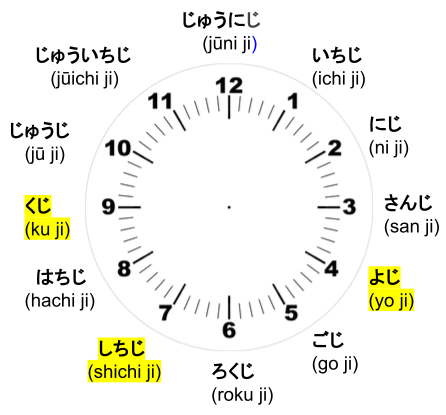
You may recall that the numbers 4, 7, and 9 have two possible readings. Here are the readings you should use when they’re used with 時 transcribed ji.
| Clock | Japanese | Correct reading | Incorrect reading |
|---|---|---|---|
4:00 | 4時 | よじ* Transcription: yoji | ❌しじ Transcription: shi ji |
7:00 | 7時 | しちじ Transcription: shichi ji | ❌ななじ Transcription: nana ji |
9:00 | 9時 | くじ Transcription: ku ji | ❌きゅうじ Transcription: kyū ji |
Here’s a little chart summarizing the proper readings for each hour in Japanese:
How to ask the hour in Japanese?
You can ask the hour using the question word is 何時 transcribed nan ji, which literally means “what hour?” The simplest sentence you can use to ask what time it is in Japanese is:
Let’s see how a typical conversation goes:
分 [fun/pun]: How to give the number of minutes?
When reading the time, the word 分 will come after the number of minutes. This word can be read different ways: ふん transcribed fun or ぷん transcribed pun, depending on the number that comes before it.
| English | Japanese | ふん transcribed fun | ぷん transcribed pun |
|---|---|---|---|
1 minute | 1分 | いっぷん Transcription: ippun | |
2 minutes | 2分 | にふん Transcription: ni fun | |
3 minutes | 3分 | さんぷん Transcription: san pun | |
4 minutes | 4分 | よんぷん Transcription: yon pun | |
5 minutes | 5分 | ごふん Transcription: go fun | |
6 minutes | 6分 | ろっぷん Transcription: roppun | |
7 minutes | 7分 | ななふん Transcription: nana fun | |
8 minutes | 8分 | はちふん* Transcription: hachi fun | はっぷん* Transcription: happun |
9 minutes | 9分 | きゅうふん Transcription: kyū fun | |
10 minutes | 10分 | じゅっぷん Transcription: juppun | |
How many | 何分 | なんぷん Transcription: nan pun |
As you see, the pronunciation of the numbers 1, 6, 8 (alternative reading), and 10 is also affected by being used before the word 分.
When using larger numbers of minutes, you should use the last part of the number word to determine how 分 should be pronounced. For example:
| English | Japanese | ふん transcribed fun | ぷん transcribed pun |
|---|---|---|---|
16 minutes | 16分 | じゅうろっぷん Transcription: jūroppun Translation: "ten six" minutes | |
17 minutes | 17分 | じゅうななふん Transcription: jūnana fun Translation: "ten seven" minutes | |
30 minutes | 30分 | さんじゅうぷん Transcription: sanjuppun Translation: "three ten" minutes |
When you want to give the time with hours and minutes, you’ll need to use the formula below:
Number of hours + 時 transcribed ji
Number of minutes + 分 transcribed fun/pun
How to ask the exact time in Japanese?
In Japanese, you can use the question phrase 何時何分 transcribed nan ji nan pun to ask for an exact time in hours and minutes. Here’s an example of how you might hear that used in a conversation.
It’s totally possible to answer the simpler question phrase 何時ですか transcribed nan ji desu ka using an exact time too. You’ll usually only need to use this longer question phrase 何時何分 transcribed nan ji nan pun when you want to clarify that you’re asking for the exact time.
秒 [byō]: How to give the number of seconds?
When reading a clock, follow the number of seconds with the word 秒 transcribed byō. Luckily there are no pronunciation changes to learn here! (YAY!)
| English | 秒 transcribed byō |
|---|---|
1 second | 1秒 Transcription: ichi byō |
8 seconds | 8秒 Transcription: hachi byō |
How many seconds? | 何秒 Transcription: nan byō |
Here’s an example of how you might use this in a conversation:
半 [han] for “half past” the hour
To talk about a time that is “half past” the hour (e.g. 2:30) in Japanese, you can use the word 半 transcribed hanmeaning half. Just place 半 after the hour counter 時 transcribed ji.
Hour Number
So the time 2:30 can be read two different ways, both of which are correct:
〜前 [mae] and 〜過ぎ [sugi] for minutes “past” or “to” the hour
In Japanese, you can also give the number of minutes “past” or “to” the hour using 〜前 transcribed mae and 〜過ぎ transcribed sugi:
〜前 transcribed mae means “before” and it is used when you’re giving the number of minutes “to” or “until” the hour. Here is the formula to follow:
Hour Number + 時 transcribed ji
Minutes until hour + 分 transcribed fun/pun
前 transcribed mae
linked text10分前Transcription: san ji juppun maeTranslation: ten minutes to three / 2:50Literally: three o’clock, ten minutes beforeNotice that the only difference between “ten to three” (2:50) and “three ten” (3:10) in Japanese, is the inclusion of 前 transcribed mae!〜過ぎ transcribed sugi is used to mean “past,” as in “ten past three.” We use a similar formula here:
Hour Number + 時 transcribed ji
Minutes until hour + 分 transcribed fun/pun
過ぎ transcribed sugi
3時10分過ぎTranscription: san ji juppun sugiTranslation: ten past three / 3:10Literally: three o’clock, ten minutes pastJust like the English word “past”, 〜過ぎ transcribed sugi is derived from a verb meaning “to pass”: 過ぎる transcribed sugiru.
午前 [gozen] and 午後 [gogo]: How to say “a.m.” and “p.m.” in Japanese?
In Japanese, 午前 transcribed gozen for “a.m.” and 午後 transcribed gogo for “p.m.” The Japanese expressions, though, come before the clock time, like this:
Unlike “a.m.” and “p.m.” you can use them alongside times that are “past” or “to” the hour. For example:
In Japan, you may still see business hours, event times, or even clock times written with the abbreviations “a.m.” and “p.m.” You can either read these literally or translate them to Japanese clock times.
| Written | Reading 1 (English time) | Reading 2 (Japanese time) |
|---|---|---|
3:00 a.m. | 3時エーエム Transcription: san ji ē em | 午前3時 Transcription: gozen san ji |
4:00 p.m. | 4時ピーエム Transcription: yo ji pii emu | 午後4時 Transcription: gogo yo ji |
“Noon” and “midnight” in Japanese
In Japanese, the word 正午 transcribed shōgo means “noon” (12:00 p.m.), and 午前零時 transcribed gozen rei ji is generally used for “midnight.” This second expression literally means “zero hour a.m.”, so you’ll sometimes see it written as 午前0時.
In casual conversation, though, you might hear two alternative expressions used:
Other useful expressions to use with Japanese clock times
Let’s go through the Japanese equivalents to some common ways you might want to use clock times in English sentences:
When an event begins:
When a clock time is the start time of an event in Japanese, like the phrase "at 3:00", it is followed by the particle に transcribed ni which in this context means “at”:
Start time
にTranscription: ni朝は何時に起きますか。Transcription: Asa wa nan ji ni okimasu ka.Translation: (At) what time do you get up in the morning?たいてい7時に起きます。Transcription: Taitei shichi ji ni okimasu.Translation: I usually get up at 7 o’clock.The duration of an event:
In Japanese, we use the pair of words から ... まで transcribed kara ... made with times like you would use “from 3:00 to 4:00” in English. Just remember that these words follow the clock time instead!
Start time
からTranscription: karaEnd time
までTranscription: made仕事は何時から何時 までですか。Transcription: Shigoto wa nan ji kara nan ji made desu ka.Translation: From what time till what time are your work hours?午前9時 から午後5時までです。Transcription: Gozen ku ji kara gogo go ji made desu.Translation: They’re from 9:00 a.m. till 5:00 p.m.The approximate time of an event:
To discuss an approximate time, like you might use “about” or “around” in English, you can use ごろ transcribed goro after the clock time. ごろ transcribed goro is not a particle, but a variation of the noun ころ transcribed koromeaning approximate time, used as a suffix.
Approximate time
ごろTranscription: goro明日は何時ごろ (に) 出かけましょうか。Transcription: Ashita wa nan ji goro (ni) dekakemasho ka.Translation: (At) around what time should we go out tomorrow?Notice that you can optionally use に transcribed ni after ごろ in this sentence!11時ごろはどうですか。Transcription: Jūichi ji goro wa dō desu ka.Translation: How about around eleven o’clock?Asking when an event happens:
Though you can use question words like 何時 transcribed nan jimeaning what time to ask for a clock time, you can also answer questions with the generic question word いつ transcribed itsumeaning when using a clock time. For example:
Speaker A:この列車はいつ発車しますか。Transcription: Kono ressha wa itsu hassha shimasu ka.Translation: When is this train going to depart?Note that you should not use に transcribed ni after いつ transcribed itsuSpeaker B:4時15分に発車します.Transcription: Yoji jūgo fun ni hassha shimasu.Translation: It’s going to depart at 4:15.You can also answer いつ transcribed itu questions with longer phrases or with days, months, or years though!
Durations: How to describe lengths of time in Japanese?
To describe an amount or length of time like “three hours” or “fifteen minutes” in Japanese, just add 間 transcribed kan after the appropriate counter for hours, minutes, or seconds.
It’s actually easier than that, though, because when you’re working with a duration of minutes or seconds, 間 transcribed kan is often dropped, especially when discussing durations of 1 minute or 1 second. So the phrases below can have two meanings:
Though, to talk about a duration of hours, you’ll need the ending 間 transcribed kan after 何 transcribed ji, with minutes and seconds it just emphasizes that you’re discussing a duration.
How to ask the length of time?
You can always use the generic duration question どのくらい transcribed donokuraimeaning how long to ask about a period of time. Such questions may be answered using hours, minutes, seconds, or a mix.
However, there are some other question words you can use to ask about time using specific units.
To ask a length of time in hours, just add 間 transcribed kan to the question word, like 何時 transcribed nan jimeaning what hour.
何時間Transcription: nan jikanTranslation: How many hours?If asking about a length of time in minutes or seconds, you will usually just use the words 何分 transcribed nan punmeaning what minutes? or 何秒 transcribed nan byōmeaning what seconds?, though you can optionally add 間 transcribed kan to these phrases as well.
何分Transcription: nan punTranslation: How many minutes?何秒Transcription: nan byōTranslation: How many seconds?
Here are a couple of dialogues to see how these question words should be used!
Time in hours:
Speaker A:きのうは何時間寝ましたか。Transcription: Kinō wa nan jikan nemashita ka.Translation: How many hours did you sleep last night?Speaker B:7時間です。0時に寝て7時に起きました。Transcription: Shichi jikan desu. Rei ji ni nete, shichi ji ni okimashita.Translation: I slept for seven hours. I went to bed at 12:00 midnight and got up at 7:00.Time in minutes:
Speaker A:このラーメンは何分でできますか。Transcription: Kono rāmen wa nan pun de dekimasu ka.Translation: How many minutes does it take to cook this ramen?Speaker B:3分でできますよ。Transcription: San pun de dekimasu yo.Translation: It takes three minutes.
Useful expressions to use with durations of time
Here are a couple of useful expressions you can use with the duration of time!
…“and a half”
You can add 半 transcribed han directly after the duration phrase add a half hour to the duration. This means that 半 transcribed han will come after 間 transcribed kan where that is needed.
1時間半Transcription: ichi jikan hanTranslation: (a period of) an hour and a half1分半Transcription: ippun hanTranslation: (a period of) a minute and a half“about two hours”
To describe an approximate duration, add ぐらい transcribed gurai or sometimes くらい transcribed kurai after the approximate duration. This means it will follow 間 transcribed kan where it’s present.
あと 20分ぐらいで京都につきます。Transcription: Ato nijuppun gurai de kyōto ni tsukimasu.Translation: We’ll arrive in Kyoto in about twenty minutes.
To sum up
In this article, we found out how to ask and tell the point of time and the duration of time in everyday conversations. Here’s a quick summary.
| Hour | Minute | Second | Half an hour | "About" | Generic question | |
|---|---|---|---|---|---|---|
| Time of Day | 時 Transcription: ji | 分 Transcription: fun | 秒 Transcription: byō | 1時半 Transcription: ichi ji han | ごろ Transcription: goro | いつ Transcription: itsu Translation: when |
| Duration | 時間 Transcription: jikan | 分* Transcription: fun | 秒* Transcription: byō | 1時間半 Transcription: ichi jikan han | ぐらい Transcription: gurai | いつどのくらい Transcription: donokurai Translation: how long |
Now it’s time to practice! Check out this Japanese clock time reference sheet or test your skills with our Japanese clock time activities to practice what we covered. Or, if you’d rather learn more about times and dates in Japanese, check out our post on calendar dates. Happy learning!