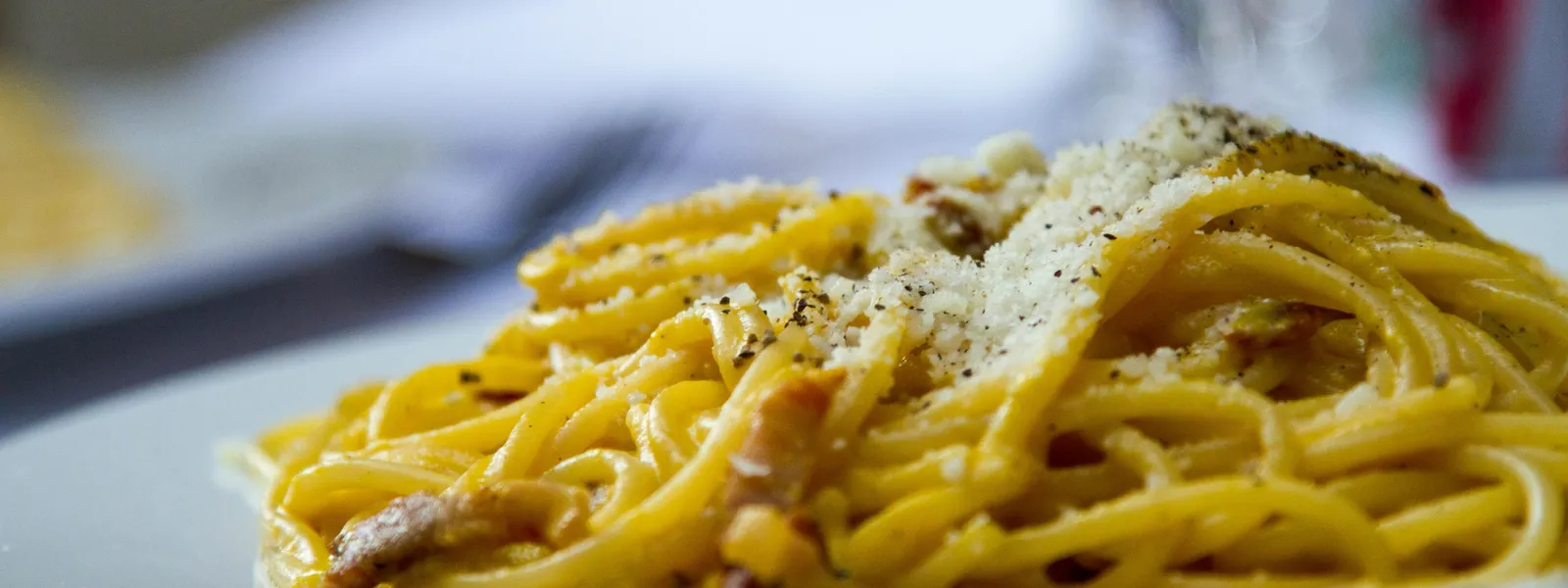
Use partitive articles (e.g. del, della, dei, delle,...) in Italian to indicate a part of a whole or an unspecified quantity. When my students have doubts on how to order a salad, I suggest they use a partitive article:
In this post, we’ll look at the partitive articles in Italian, when to use them, when they can be omitted, and some common expressions using them. Keep on reading!
How to form partitive articles in Italian?
Partitive articles are formed by combining di + . They are the equivalents of English “some” or “any.” Let’s review the forms:
| Number | Masculine | Feminine |
|---|---|---|
Singular | del, dello, dell' | della |
Plural | dei, degli | delle |
The definite article that is used with a given noun will determine which partitive article you should use with it. For example:
To learn the full rules for choosing the definite article (and therefore the partitive article) to use with different nouns, check out our post: What are the articles in Italian?
Now let’s see when to use partitive articles in Italian!
When to use partitive articles in Italian?
Partitive articles are used to indicate a part of a whole or an unspecified quantity of something uncountable. They roughly translate to “some” or “any” in English, but sometimes they are not translated at all, and this makes them a bit tricky.
Let’s review a few cases where we’ll use the partitive article.
Singular partitives for a portion of something singular
partitive articles are used to describe a portion taken from something singular. Most often, this is used to describe a nonspecific quantity of a because mass nouns are singular, for example:
- Vorrei dell’olio per condire l’insalata.Translation: I’d like some oil to dress my salad.
- Vuole dello zucchero nel caffè?Translation: Do you want sugar with your coffee?
However, you can use a singular partitive with a , to imply that you’re talking about a portion of the substance of that count noun.
Plural partitives for an unspecified quantity
You can use the partitive (and the plural form of the noun) to show that you are talking about a generic or unspecified quantity of that noun. For example:
- Anna ha letto dei libri.Translation: Anna read some books
- Ho comprato degli spinaci.Translation: I bought some spinach.
But you’ll most often see alcuni meaning some or qualche meaning some used rather than the plural partitive:
- Anna ha letto dei libri. → Anna ha letto alcuni libri.Translation: Anna read some books.
- Carlo ha fatto delle lezioni di violino. → Carlo ha fatto qualche lezione di violino.Translation: Carlo took some violin lessons.
When can partitives be omitted in Italian?
Basically, partitive articles can be omitted from , , and sentences in the following cases:
In negative sentences, the partitive is omitted or replaced by a negative word like nessuno meaning any.
- Hai dei biglietti?Translation: Do you have any tickets?
- No, non ho biglietti. / Non ho nessun biglietto.Translation: No, I don’t have tickets. / I don’t have any tickets.A singular noun is used after nessun.
When you make a list of items. You can even leave it out with two elements:
- Devo comprare quaderni, penne, e matite.Translation: I have to buy notebooks, pens, and pencils.
- Sul tavolo ci sono piatti e bicchieri.Translation: On the table there are plates and glasses.
After the di. But remember that you can use alternatives instead.
Ho bisogno di acqua. OR Ho bisogno di un po’ d’acqua.Translation: I need some water.
Expressions with partitives
Partitives are also used in some Italian expressions that can be very useful to improve your speaking skills. For example:
avere del sangue freddo meaning to be cool under pressureliterally cold-blooded
Ci vuole del sangue freddo per lavorare in terapia intensivaTranslation: It takes a cool head to work in the ICU.Literally: (lit.) some cold bloodavere del fegato meaning to have some guts
In questa avventura devi avere del fegato.Translation: In this adventure you need to be brave.avere dello spirito meaning to have some wit
Darei tutta la mia bellezza per avere metà dello spirito di mia sorella.Translation: I would give all my beauty to have half of my sister’s wit.
Conclusion
In conclusion, even if partitive articles are used less than definite and indefinite articles in Italian, they become important when you want to express a part of something in singular and an undetermined quantity in plural.
Check out these exercises to practice using partitive articles vs. other types of Italian articles!