Magari is one of the most commonly used expressions in everyday Italian! It is a very versatile word that can mean everything from “maybe” to “gladly.” It is most often used as an or an , but it can express enthusiastic participation, regret, or desire depending on the intonation you give it.
Make way for magari, a “do it all” expression that Italians use profusely, as in:
- Vuoi andare in Italia? Magari!Translation: Do you want to go to Italy? I wish!
- Magari potessi andare in Italia!Translation: How I wish I could go to Italy!
- Magari ci sentiamo dopo!Translation: Eventually we will talk later!
So if you have wondered what it means, well, magari adesso lo scopriamo insieme meaning maybe we can now discover it together.
How to use ‘magari’ in Italian?
Magari can be used on its own, as an , before the subjunctive to mean “if only,” or as an . First, we’ll go over how to use it by itself, then, we’ll see how to use it in a sentence as an adverb or together with the subjunctive. Are you ready?
How to use the interjection ‘magari’?
Magari is often used as an interjection to answer questions, expressing an emotional reaction. Let’s look at the following examples that you can answer by just saying "Magari!" and where your intonation can convey different nuances of meaning to your answer:
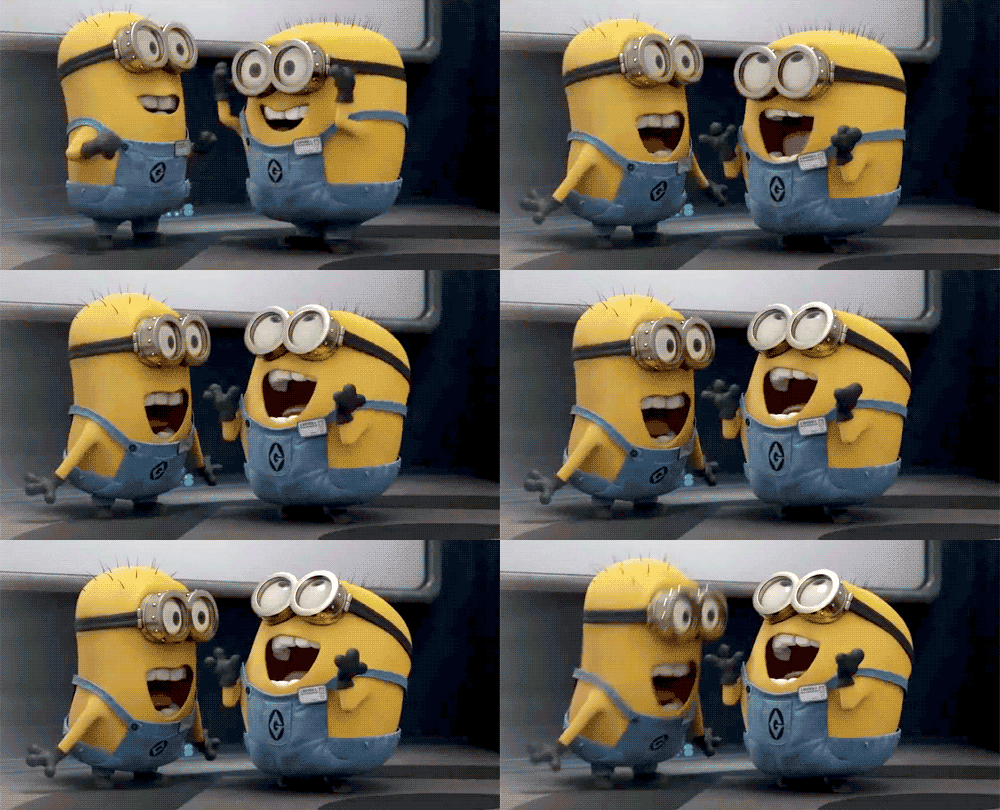
Be enthusiastic while answering magari to convey that you gladly accept an invite.
Magari = Volentieri! meaning Gladly!
For example:
- Mamma vuoi venire con me in Italia?Translation: Mom, do you want to go to Italy with me?
- Magari!Translation: Gladly! / I wish (if only I could)
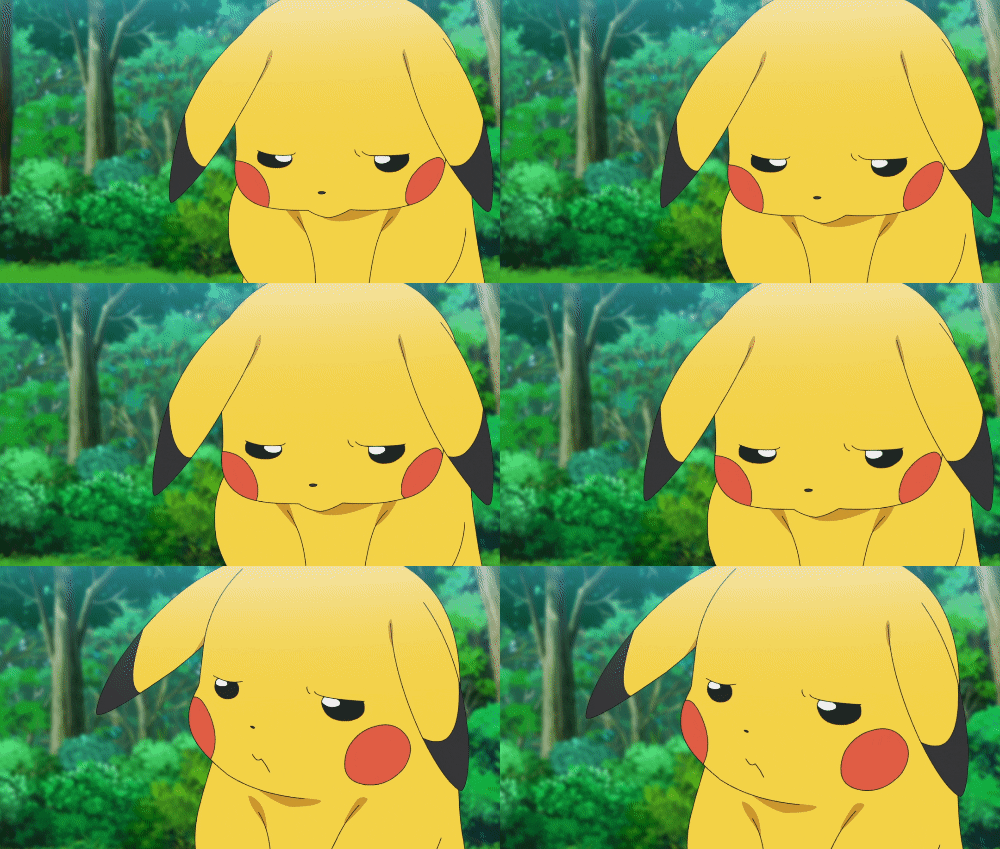
If your tone is doubtful or sad as you say magari, then you are conveying that you wished you did something differently.
Magari = sarebbe stato bello (se)… meaning it would have been nice (if)...
For example:
- Mara, hai superato l’esame di chimica?Translation: Mara, have you passed the chemistry exam?
- Magari!Translation: I wish (I had!)
If your tone is hopeful, wishful, and grateful as you say magari, then you are conveying that you would like the help offered, or you wish something would happen.
Magari = sarebbe bello (se)… meaning I wish; It would be nice (if)...
For example:
- Prenotiamo anche per voi?Translation: Shall we also make a reservation for you?
- (Ohhh!) Magari!Translation: Ohhh, thanks! That would be great!

How to use ‘magari’ to express a wish with the subjunctive?
A very common use of magari is with the (imperfect or past perfect) to express a wish which, in English, means “if only…” Here are the two patterns you can follow:
To state a wish or desire about the present:
magariTranslation: if onlyimperfect subjunctive
Magari piovesse!Translation: If only it would rain!Magari Alfredo arrivasse presto!Translation: If only Alfredo would arrive soon.To state a wish or desire about the past:
magariTranslation: if onlypast perfect subjunctive
Magari avesse piovuto!Translation: If only it would have rained!Magari foste arrivati prima!Translation: If only you had arrived sooner!
What are the other meanings of ‘magari’?
The final use of magari in Italian:
Magari = possibility
As an equivalent of forse meaning maybe, possibly or eventualmente meaning (maybe) eventually
- Chiamo i miei genitori, magari li trovo in casa.Translation: I am calling my parents, maybe I will find them at home.
- Magari mi chiami appena arrivi in ufficio.Translation: Eventually, you could call me as you arrive in the office.
To sum up
Magari is an extremely versatile and useful word for everyday conversation. A magic word that can be used on its own (as an interjection) or in a sentence with many English meanings: “maybe,” “yeah, right!,” “I wish,” “if only,” “gladly,” “I’d rather.”
Let’s go and practice the uses of magari now!