
An English is called reflexive when the and the of the verb are the same. When it happens, the object is a reflexive pronoun, such as myself or herself. So basically, a reflexive verb is a verb used with a reflexive pronoun.
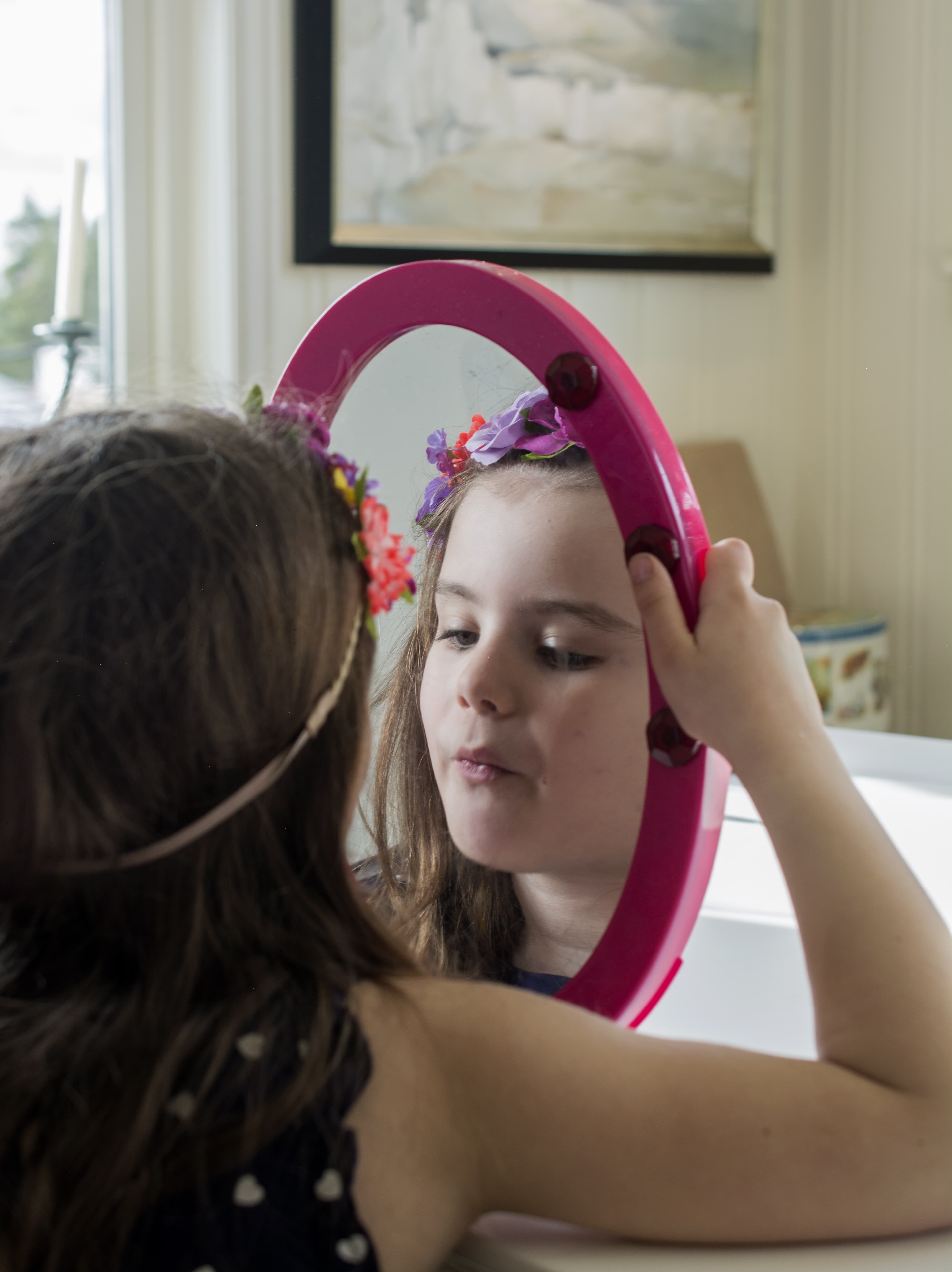
For example, who does the girl see when she looks in the mirror?
The subject and the object are the same person! That’s why sees is a reflexive verb in this sentence.
This post will cover what a reflexive verb is, how it is structured, and how it is used in English. Can any verb be reflexive in English? Are there any verbs that are always reflexive? What are some common problems English learners may have with reflexive verbs? Let’s find out!
What do reflexive verbs look like in English?
In English, reflexive verbs do not look any different from other verbs, so only context can tell you if the verb is reflexive or not – look for a reflexive pronoun!
A verb is reflexive if the subject and the object of this verb are the same. You can recognize a reflexive verb by the typical sentence structure around it:
subject
reflexive verb
reflexive pronoun
(-self / -selves)
Notice the difference:
You can see that the same verb introduced is reflexive in one sentence and not reflexive in the other. You do not need to do anything to “make” an English verb reflexive or not reflexive! Just use it with the same subject and object.
Can any verb be reflexive in English?
Any English verb that can take a can be a reflexive verb. Most reflexive verbs have the same meaning they have when used non-reflexively, for example:
| Non-reflexive use (subject + verb + direct object) | Reflexive use (subject + verb + reflexive pronoun) |
|---|---|
Michael loves his daughter so much! | Michael loves himself more than anyone else. |
I paid the workers weekly. | I paid myself a bonus at the end of the year. |
Donna calls her mom every day. | Donna called herself to find her mobile phone. |
You remember my brother, right? | Do you remember yourself as a three-year-old? |
Phrasal verbs and verbs that need a after them (before the object) can be reflexive too. For example:
phrasal verb
reflexive pronoun
I don’t need any help, I can look after myself just fine!You can't give up on yourself like that!verb
preposition
reflexive pronoun
Wherever you go, you can never escape from yourself.That’s nonsense! Just listen to yourself!She can now rely on herself.
There are two types of verbs in English that stand out in their relationships with reflexive pronouns. The first type of verb doesn’t usually take a reflexive pronoun as its object, even though these verbs can generally take direct objects. The second type changes its meaning when the verbs are used reflexively. What are these verbs?

Verbs that have “reflexive” meanings when there is no object
Some English verbs, like wash, get up, shower, shave, or stretch have a reflexive meaning any time that they are used without an object. This means that when there is no object, we assume that the verb affects the subject, just like a reflexive verb.
Many verbs used to describe moving your body or caring for yourself are in this group.
| No object | = | Reflexive verb |
|---|---|---|
He washed. | = | He washed himself. |
She got up. | = | She got herself up. |
They showered. | = | They showered themselves. |
We shaved. | = | We shaved ourselves. |
You stretched. | = | You stretched yourself. |
These verbs can all be non-reflexive verbs too – just add an object that is not the same as the subject:
| No object | Non-reflexive |
|---|---|
Mike shaves every morning. | The barber shaves ten clients a day. |
Naomi bathes every Sunday. | Naomi bathes her baby every day. |
Liam always stretches before running. | Liam stretches his legs before running. |
Some common verbs that behave this way include:
- wake up
- get up
- sit (down)
- lie (down)
- shower
- wash
- get dressed
- (un)dress
- turn (around)
- trip
- scratch
- bathe
Some of these verbs can have a slightly different meaning if you do use them with a reflexive pronoun. Usually using the verb without an object sounds more like an activity, while using the verb with a reflexive pronoun sounds more like a physical process. Sometimes this means that the version with the reflexive pronoun will have a very odd meaning. Compare:
| No object | With a reflexive pronoun object |
|---|---|
He relaxed for an hour. He rested. | He relaxed himself on the couch. He made his body feel less tight and more comfortable. |
I turned around and saw his face. Focus is on the action of turning, which may be accidental. | I turned myself around to see his face. The action of turning is definitely intentional, and maybe difficult to make. |
Sophie showered before work. This is the normal way to say it. | Sophie showered herself before work. This sounds very strange, like Sophie carefully sprayed herself all over, like washing a dog. |
Verbs that change meaning when they are reflexive
There are also verbs that do change their meaning when they become reflexive. Here are some of them:
| Verb | Meaning | Example |
|---|---|---|
to enjoy oneself | To enjoy an event / to be happy | Tim really enjoyed himself at the karaoke night. |
to help oneself (to something) | to take what you want (usually about food) | We have candy, cupcakes, and brownies. Please, help yourselves! |
to behave oneself | to show good behavior | Peter, Kyle, stop running! Behave yourselves, boys! |
to find oneself | to discover who you really are | I didn’t really find myself until after I retired. |
to realize your situation after not paying attention | I opened my eyes and found myself on a hospital bed. | |
to repeat oneself | to say something you have said before, often by mistake | Oh, have I told you that before? Sorry if I am repeating myself. |
suit yourself | a set phrase we use to tell someone they can do whatever they want (usually when you think it’s a bad choice) |
|
to apply oneself | to work extremely hard | I didn’t apply myself and failed to become a pianist. |
to see oneself | to imagine your future | Where do you see yourself in five years? This is a typical question at a job interview. |
to explain oneself | to give reasons for your (bad) behavior | Your teacher told me you were in a fight today! Can you explain yourself? |
to distinguish oneself | to do something great that people remember, to prove you are different from others | She distinguished herself by becoming the first female train conductor in history. |
Are there any verbs that are always reflexive in English?
Yes, there are verbs in English that are used exclusively with reflexive pronouns, but not many. Some examples are:
- pride yourself in (doing) something
- content yourself with (doing) something
- avail yourself of something
- absent yourself (from something)
Conclusion
Reflexive verbs in English are verbs that are used with reflexive pronouns as their direct objects.
Their key features are:
They have a reflexive pronoun as their object.
Only verbs that can have an object can be reflexive.
Some English verbs have a reflexive meaning when they are used without an object (e.g wash, get up, relax).
Some verbs change their meaning when used reflexively (e.g. enjoy, behave).
Try these activities to practice reflexive verbs in English now!