
In English, we use as to show how similar or different two people, things, places, or situations are. Although it’s a small word, it is a powerful tool that allows you to compare qualities, quantities, and how something is done. It is especially useful to show that two things are the same or equal in some way. For example:
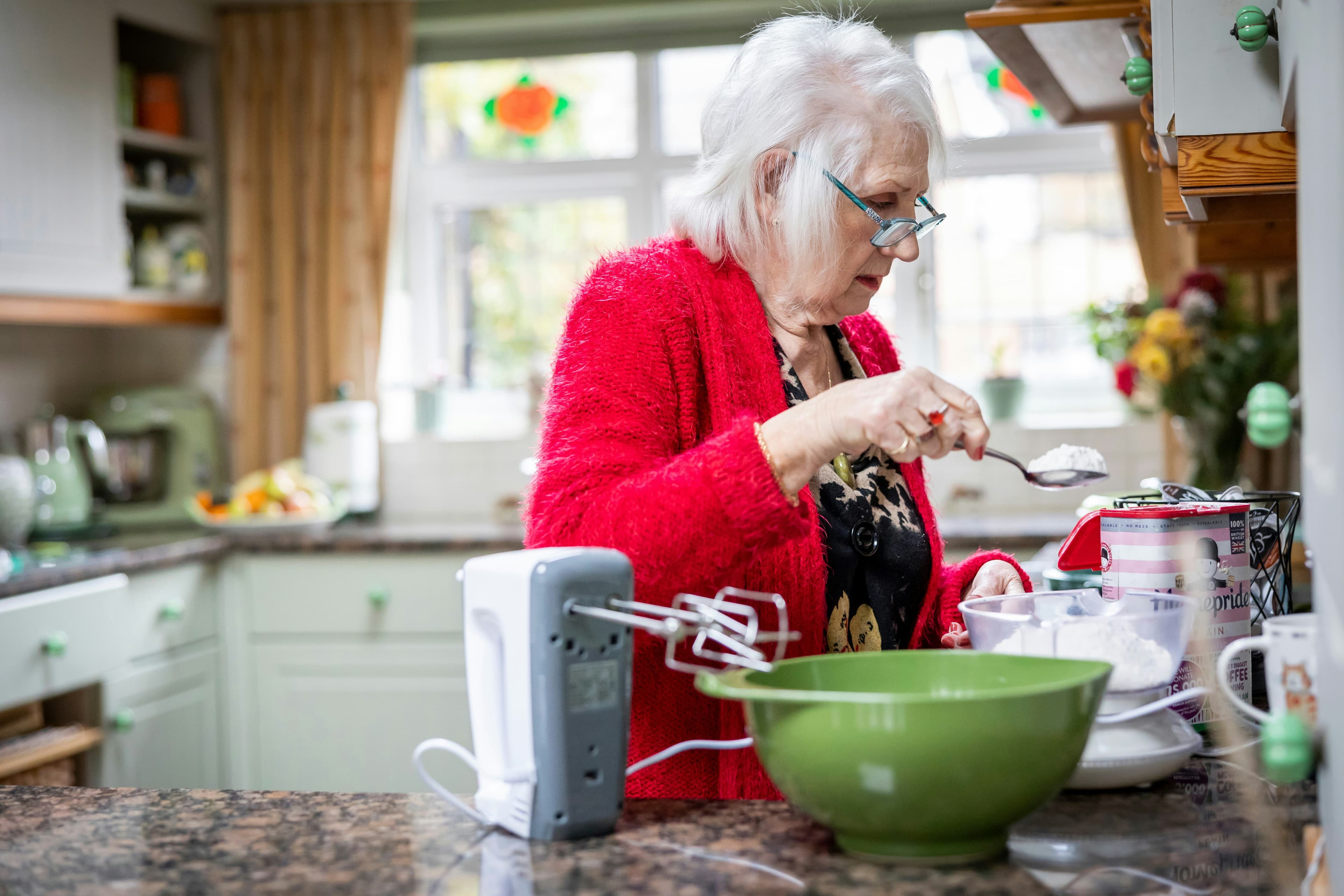 Mary loves baking as much as Helen does.Mary loves baking a lot.
← Helen loves baking a lot too.
 Mary’s cookies are as tasty as Helen’s.Mary’s cookies are tasty.
← Helen’s cookies are tasty too.
Follow me, and you’ll find out…
what you can put between as … as
how to use as for different degrees of similarity and difference
what grammar rules sentences with as follow
Let’s have a look!
How to say that things are the same using ‘as’?
You can use as in a number of ways to say that two things are identical. The general structure of a sentence with this meaning looks like this:
object of comparison
What can go between the first and the second as? Let’s take a look!
‘As’ + adjective + ‘as’
Use this structure to say that two things, people, or situations have the same quality and to the same degree:
- Mary is as hardworking as Helen.
- Mary’s kitchen is as big as Helen’s.
Check out our post on comparative adjectives in English for more examples like these!
‘As’ + adjective + ‘as’
Use this structure to say that two actions are done similarly in some way:
- Mary bakes as often as Helen.
- Mary decorated the cake as wonderfully as usual.
Check out our post on comparative adverbs in English to learn more!
‘As’ + ‘much/many/little/few’ + ‘as’
Use this structure to say that two amounts are the same. You can add a noun after much / many / little / few to give more information:
- Mary bakes as much as Helen does.
- Mary made as many cookies as Helen.
- Mary puts as little sugar as she can in her cherry pies.
- Mary sold as few cakes as Helen yesterday.
‘As’ + adjective + noun + ‘as’
Use this structure to say that two nouns are the same kind of things and share the same quality. You must use the article a/an before a singular countable noun:
- Mary is as talented a baker as Helen.
- Mary’s chocolate cake is as great a dessert as her apple pie.
It is uncommon to use plural or mass nouns in as … as structures. It is better to use other means of comparison, but if you must use as … as, omit the article:
- 🆗 Mary uses as fine kitchenware as Helen does. (odd)
✅ Mary uses kitchenware that is as fine as Helen’s. (more natural) - 🆗 Mary makes as amazing wedding cakes as Helen. (odd)
✅ Mary’s wedding cakes are as amazing as the ones Helen makes. (more natural)
A more advanced look at ‘as…as…’ comparisons: How to use them to combine sentences?
Any time you use as… as… to make a comparison, you are really using as… as… to combine two similar sentences. We saw some common ways that two sentences are combined above, but there are other ways to do it too.
Let’s start with the two sentences below:
- Mary is hardworking.
- Helen is hardworking.
To say how these two ideas are similar, you put as around the quality that is equal:
Helen is hardworking.
Then, you can drop repeated words. While you definitely need to drop hardworking, you have some choice about the rest. The more you drop, the more informal the sentence will be:
- Mary is as hardworking as Helen is.a little formal
- Mary is as hardworking as Helen.a little informal
Let’s look at another example:
- Mary's cake is great.
- We expected that Mary's cake would be great.
These combine to form…
Now, let’s eliminate some repeated information:
- Mary's cake is as great as we expected it would be.more formal
- Mary's cake is as great as we expected.less formal

How to say that things are different with ‘as’?
To say that two things, people, amounts, etc. are completely different, all you need to do is to add not before one of the as … as … structures described above. The subject in this structure is always below or worse than the object of comparison. For example:
subject
verb
object of comparison
How to modify comparisons with ‘as’?
Two things may be very similar or very different, and they may also be anything in between. To show the degree of similarity or difference, you can use various modifiers before the structure with as:
subject
verb
modifier
object of comparison
Some of the most common modifiers are:
Complete similarity
Striking difference
For example:
Complete similarity
Striking difference
How to use ‘as’ with an implied object of comparison?
Usually we compare two things, thus, we name those things directly and need to say as twice in a sentence. However, sometimes it is obvious from the context what we compare something with. In such situations, we can make an indirect comparison using only one as.
We most often leave out the object of the comparison when not or a modifier comes before as. For instance:
- Mary experiments a lot with her baking, while Helen is not as adventurous (as Mary).
- Mary puts one spoon of cinnamon in her apple pie. Helen puts just as much (as Mary).
- Mary has been baking for 45 years. Helen is nowhere near as experienced (as Mary).
It is also possible to use so, that, or such instead of as in negative sentences with implied object of comparison:
- Mary has been baking for 45 years. Helen is not so/that experienced.
- Mary has been baking for 45 years. Helen is not such an experienced baker.
In fact, so, that, or such are more common than as when the object of comparison is implied.
What are some common expressions with ‘as’?
We use as in a number of common expressions. First of all, there are figures of speech called “similes,” which create a vivid description of something by comparing it to something else. They are often used in literature, especially poetry, but some of them made their way into everyday language. Most similes would include either as or like as means of comparison.
Though you can always create your own comparisons, some comparisons are so “classic” in English that they have become set phrases. For example:
- as cold as ice
- as blind as a bat
- as tough as nails
- as good as gold
- as sly as a fox
Apart from similes, there are also some expressions commonly used after the second as in a sentence:
- as they comeMy aunt is as stubborn as they come.Translation: = extremely stubborn
- as anythingHiring more people is as important as anything.Translation: = extremely important
- as can beI’m as happy as can be.Translation: = extremely happy
- as possiblePlease come home ASAP (as soon as possible).Translation: = as soon as you can
- as it getsThis is the best price you can find. This is as good as it gets.Translation: = it won’t be better
Finally, there are common expressions where not so is used instead of not as:
- I’m not so sure.
- It’s not so good/bad.
- Not so loud, please!
- That was not so long ago.
- Not so fast! Just because I won a lottery doesn’t mean I have to support some charity.Not so fast! is used to say that you disagree with someone and that they are too quick in their conclusions or actions.
Conclusion
We use the word as in English to say how similar or how different two things, people, amounts, or actions are. We use different sentence structures for such comparisons:
To say that two things are very similar or equal, we use as … as ….
To say that two things are very different, we use not as … as ….
To show how similar or different two things are, we use a modifier (e.g. exactly, almost, not quite, nowhere near) + as … as ….
We often use not so or not that instead of not as when the object of comparison is not given directly, or not given at all.
Feeling as ready as can be to make comparisons using as? Why not practice making as comparisons in English! Happy learning!